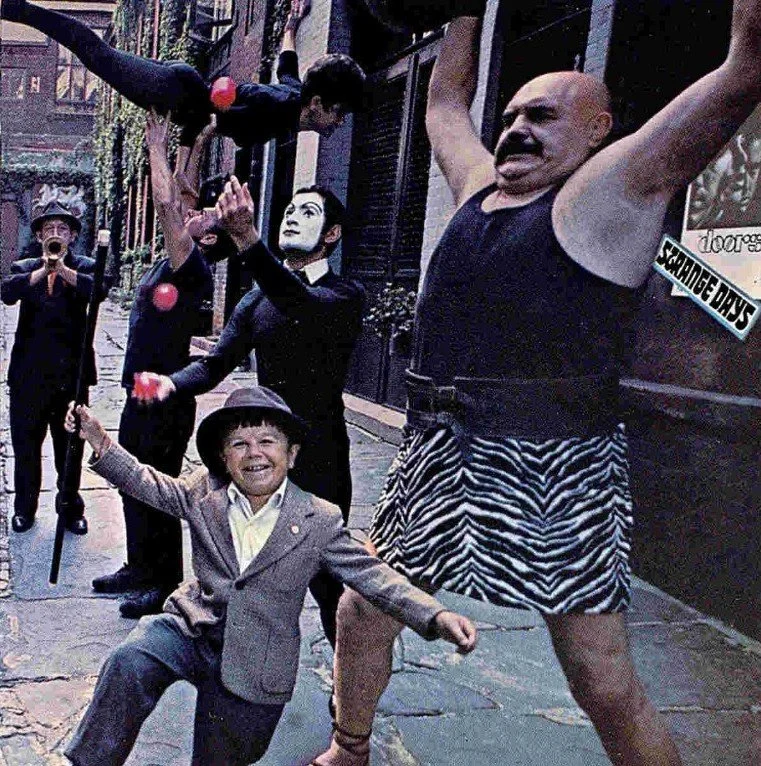
The freaks come out at night.
— Whodini, "Freaks Come Out at Night" (1984)
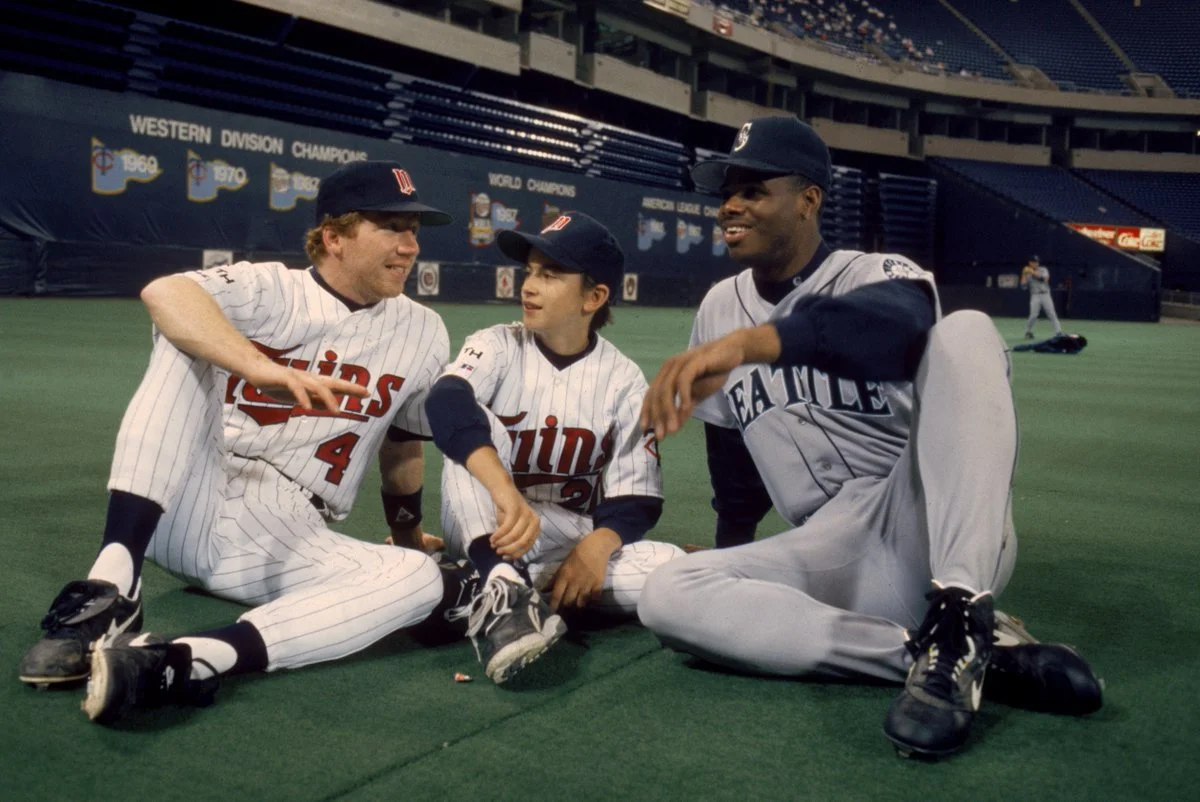
A few months ago, while reviewing LITTLE BIG LEAGUE, I remember thinking it was a pretty good movie, though one that made the regrettable decision to kill off Jason Robards far too early. He plays the owner of the Minnesota Twins, then dies before we have much chance to get attached to him. With Halloween approaching, I happened upon SOMETHING WICKED THIS WAY COMES, a movie in which Robards has the good sense to stick around. And is it any good? Well, you'll have to stick around for the rest of the review to find out. For now, I'll just say it isn't terrible.
Charles Halloway is convinced he's a failure as a father, and the first sixteen minutes establish it. Doc tells him at the bar to remember his heart, one drink and one cigar. At home, he tells his wife that Will makes him feel so darn old, that a man should be able to play baseball with his son. She answers, "Baseball is not necessary, not with a heart like yours." The real confession comes the next evening, when he finally tells Will about a picnic on the Indigo River. A current swept four-year-old Will into the middle of the water, and Charles stood on the bank, helpless, because his own father never thought it was right to teach boys to swim. The man who dove in without taking his boots off was Jim's father. Robards plays all of it weary and apologetic, and he never asks us to feel sorry for him. In the novel, Halloway is the library's janitor. The movie promotes him to librarian, making Dark's jab about "living only through other men's lives" more literal. Then the boys explain why they've been hiding, and Charles says he believes them. Jim objects that they aren't grownups. "That's why I believe you," Charles says. It reminded me of THE SIMPSONS episode "Lisa the Iconoclast," where Homer is the only person in Springfield who takes his daughter's side. Homer's way of backing her up involves digging up a corpse. Charles reads the boys an entry from his father's diary. He's a better dad than he thinks, and the movie has the proof ready. When Dark traps him in front of a mirror and tells him his son hates him, Will answers by shouting that he loves him. Charles shatters the glass.
The carnival works like THE MONKEY'S PAW, except nobody has to find it in a drawer. Every wish gets granted, and the bill comes with it. The movie makes sure we like Ed the bartender before it takes him. He has one arm and one leg, he swings the hammer anyway, and when the bell dings, Will and Jim hug him. It's a short, sweet moment, and then his prize arrives, a free pass to the mirror maze. Ed walks in, sees a reflection with both legs, and we hear him wishing he could run, throw, and tackle again. The next time we see his bar, it's empty. "First time in 20 years," Doc says. Miss Foley, who folks say was once the most beautiful woman in town, comes out of the same maze dazed, talking about how bright and beautiful it was. Dark later calls her a "blind girl." The diary entry Charles reads in the library supplies the rule. A lame servant girl asked the fortuneteller how she might run. "Her leg mended, and then she ran mad." "It seems they destroy people by granting their dearest wishes." Dark never has to invent anyone's unhappiness. He describes his diet in that same library, "funerals, bad marriages, lost loves, lonely beds," and Green Town had plenty of all four. The carnival offers to fix it as a favor, free of charge, and supplies the mirror.
This is where I part ways with the story. Dark's pitch to Charles is a countdown that starts at 30 and gives up at 52 with a "Your loss!" The movie takes place in the 1930s, when a man in his fifties might have felt older than he would today, but I still have trouble accepting fifty-four as an age worth mourning. If I woke up tomorrow twenty years old, I don't think my friends and family would stop caring about me. I'd still be the same person inside, with a couple of extra decades to get to the things I haven't. Dating would be trickier, since I'd have little in common with people my age, but old souls already deal with that. The people who really need this story's warning are Uncle Rico in NAPOLEON DYNAMITE and Al Bundy in MARRIED... WITH CHILDREN, men who would get their youth back and spend it reliving the fourth quarter coach never let one of them play and the four touchdowns the other scored once. No carousel fixes that. Dark's offer to Charles is smarter than that, though. He counts up through "You might still learn to swim" and "a year when you could run up the stairs without panting for breath," which are Charles's own regrets, not a generic wish for youth. Wanting more time to live and being unable to enjoy the life you're in are two different problems. Dark pretends he can solve the first because he knows Charles suffers from the second.
Jim Nightshade is the boy with the most to lose, and the movie shows us why before the carnival arrives. He tells anyone who will listen that his father is in Africa and coming home with a parrot and a shrunken head, and Will points out that Jim's father never writes. Things aren't much better at home. Mrs. Nightshade tells him to find something in the icebox because "Mother's just all tired out." Later he asks her whether he looks like his father. "Too like," she says, and adds that the day he leaves home, her Harry will be dead forever. A mother who can't look at her son without seeing her husband gives him one more reason to want out, and Jim wants out. He's the one who keeps threatening to remember things "when I'm older, darn it," and the one Will accuses of planning to ride the carousel the other way. Compare Will's mother, who marches him upstairs for sneaking out and calls Jim a bad influence. It isn't kind to Jim, but it's the sound of someone paying attention. Dark hears the difference. Calling to the boys in the library, he asks Jim how he'd like to be grown up, not looked down at, not told to run away and play. Then he says, "I'm the father you've been waiting for." Jim has spent the movie waiting on a letter from Africa. Dark shows up in person, which is more than his real father has managed.
The 1980s were good at movies that were creepy without being scary, the kind that ruin one night's sleep and then get watched again the following October. SILVER BULLET is another example, and SOMETHING WICKED THIS WAY COMES belongs in the same company. A lot of the charm is in the casting. Jonathan Pryce plays Mr. Dark like a courteous showman, introducing himself with "My name is Mr. Dark. I advise you to respect it," and later explaining that his people butter "plain bread with delicious pain." Pam Grier, who made her name in COFFY and FOXY BROWN, says little as the Dust Witch and is still the most frightening person in any scene she enters. Royal Dano gets some of Bradbury's most colorful dialogue as Tom Fury, the lightning-rod salesman, a man who wants to know what color lightning is and where the thunder goes when it dies. "Did I take the name? No, sir. The name took me." When I read the novel, I figured this would be tough to pull off today, even with modern CGI and expert practical effects. The movie doesn't pull it off entirely. Green Town was built on the Disney Studios backlot, and it looks like exactly that, a storybook street constructed for the occasion. The supernatural events have the handmade look of something put together with a lot of fog and whatever tricks the filmmakers could devise. That's part of why it works. A carnival that arrives in the middle of the night on a train nobody is sure they heard doesn't need to look real. It needs to look like a story somebody told you.
The movie's rough edges make more sense once you know how it got made. Bradbury first wrote a screenplay in 1958 for Gene Kelly, and it took until 1981 and Disney to get it shot. Bradbury and director Jack Clayton eventually fell out over an uncredited rewrite by John Mortimer. The draft I read is dated August 1981 and still has pages revised on September 30, two days after cameras started rolling. Then the test screenings went badly. Disney effectively took the film out of Clayton's hands, reportedly spent another $5 million overhauling it, and brought Bradbury back for a new opening narration and a new ending. Georges Delerue's score was dropped for being too sinister, and James Horner wrote a replacement on short notice. The film planned for Christmas 1982 finally opened on April 29, 1983, which is a strange time of year for a movie about October. The reshoots came long enough after the original shoot that the boys had visibly grown. In a couple of scenes, Will seems about a foot taller. It's almost the MADTV FULL HOUSE reunion sketch, where the Olsen twins, who split the role of Michelle, can no longer pass for the same girl because Nicole Sullivan plays a considerably heavier Mary-Kate. This is a movie about a carousel that rewinds people's ages, and it can't keep its own boys the same age from one scene to the next.
From Will shouting "I love you" at the mirror to the final "Tie!," my subtitle file clocks about six minutes, and a lot happens in them. Jim climbs onto the carousel beside Dark, lightning hits, Dark withers into a husk, the carnival tears itself apart, and a man with a bad heart saves a boy by acting like an idiot. That last part is the best of it, and it's faithful. Charles snaps Will out of his tears, tells him the night people love them, and dances around announcing that he's the great whooping crane, which is nearly line for line what the novel does. Fighting evil with laughter and love is a nice idea, and the movie sells it. What it skips is the novel's other half. In the book, Dark isn't killed by lightning. He has ridden the carousel backward into a lost nine-year-old boy, and Charles recognizes him, holds him close, and starves him with kindness, on the theory that evil has only the power we give it. Afterward, Will asks whether they'll ever come back. "No. And yes," Charles says. "Maybe they're already here." The boys look around and see nobody but themselves. Then all three, including Charles, briefly consider taking another ride on the carousel. The movie replaces that conversation with a narrator telling us that "being old was all right now" for his father, and a footrace that ends in a tie. It's sweet, but the novel leaves all three characters vulnerable to temptation, and the movie lets us go home reassured. The carnival is gone, and everything it fed on is still in town. The movie doesn't need a longer climax so much as a couple more minutes to consider what happens after it.
So, is it any good? I said at the start that it isn't terrible, and I'm willing to go a little further than that. It's uneven, the ending is rushed, and you can see the effects of Disney's attempts to make it more accessible. But Robards is the real thing, the atmosphere holds up, and the ideas under the carnival are better than the film has time to develop. Dark makes his living on dissatisfaction. He finds what someone is missing and sells it back as a favor, always in the politest terms: "Excuse me, gentlemen, I am a stranger in this town." He merely wishes, he says, to give the boys "the valuable rewards that they so richly deserve." Charles has no such manners. He sings badly, dances worse, and gives up his dignity to save a boy who isn't even his. What Dark sells has a price, and what Charles gives away doesn't. Bradbury called the finished film "not a great film, no, but a decently nice one," and I like that he reached for the word nice. Dark has the better manners. Charles has the better heart, bad as it is.
Final Verdict: 77 out of 100
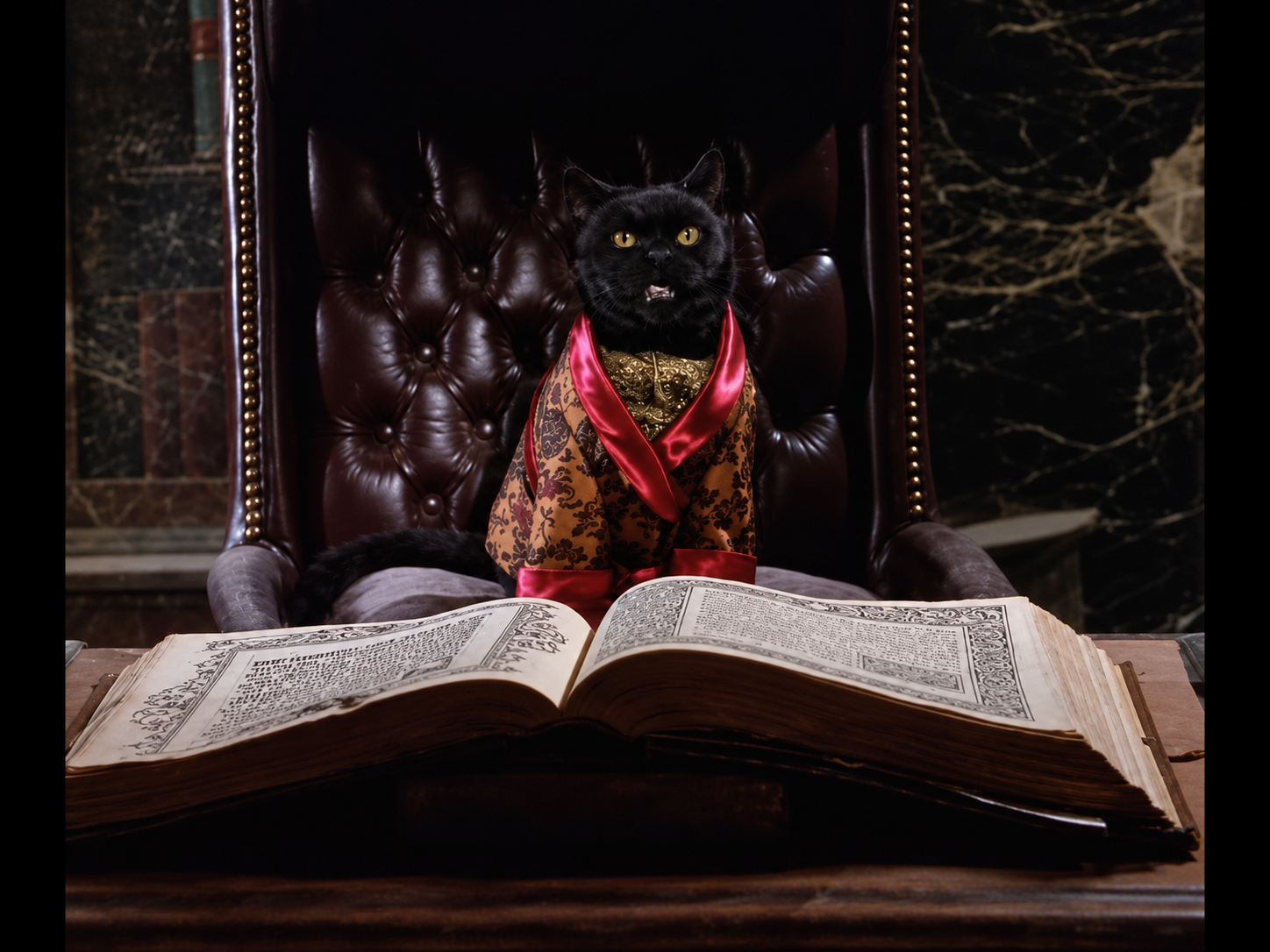
Sidenote: What's Halloween without a little Salem Saberhagen?