
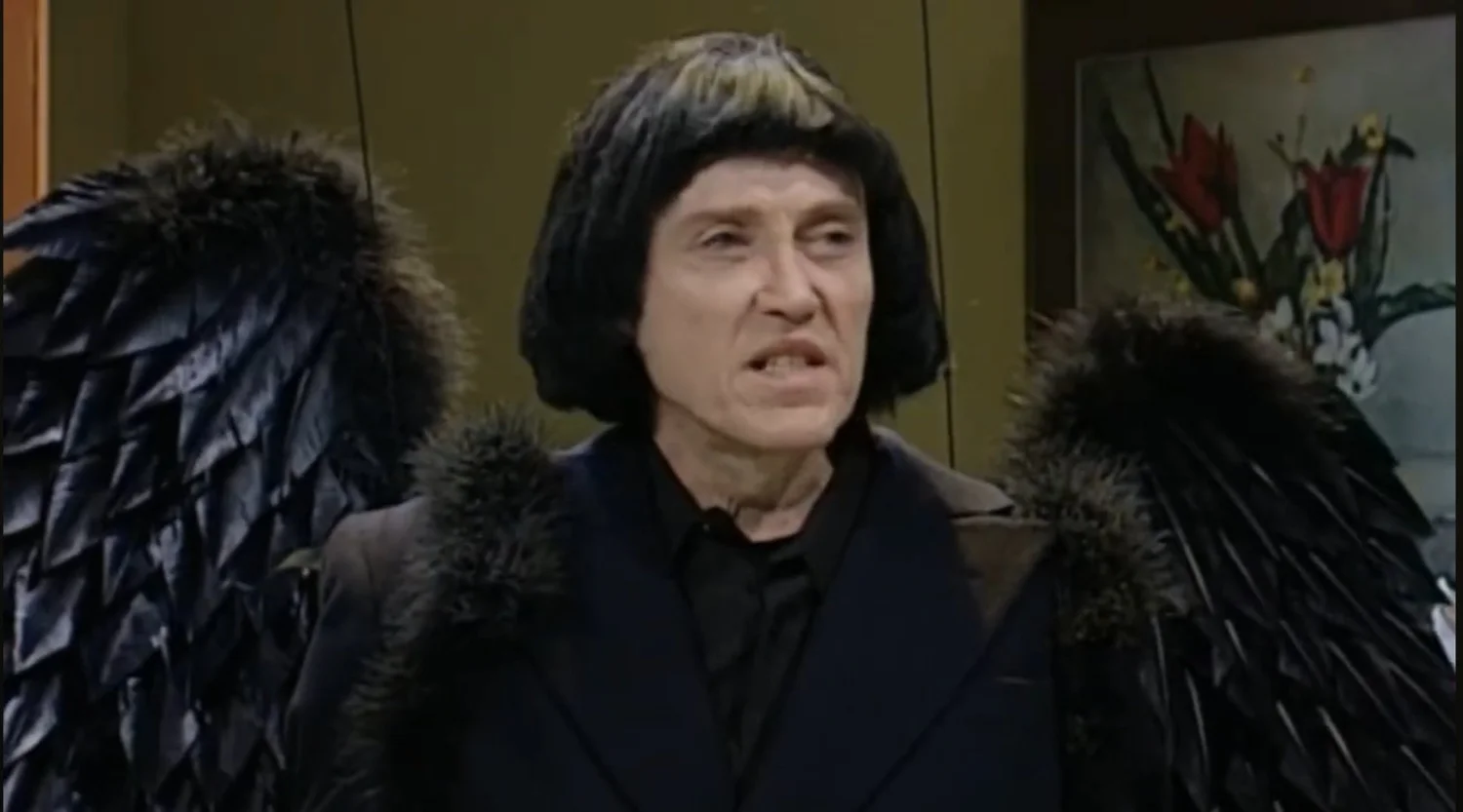
THE PROPHECY is a film about angels in which every angel is either a monster, a doormat, or barely adequate. Gabriel is petty and murderous. Lucifer is self-serving. Simon, the film's closest thing to a heroic angel, is less good than he is simply not terrible. The beings who emerge from the whole affair with any moral standing are the humans — the "talking monkeys," as Gabriel contemptuously calls us. Whether that's a deeply intentional statement about the value of the human soul or a happy accident, THE PROPHECY doesn't pause long enough to tell you.
A second war is brewing in Heaven. Gabriel, archangel and deeply aggrieved middle manager of the cosmos, has decided that God made a mistake by favoring humans over angels. We have souls. Angels don't. This is, to Gabriel, an intolerable situation, and he intends to correct it by finding the most evil human soul in recorded history — a Korean War colonel — and weaponizing it for his side. An angel named Simon has hidden the soul inside a young Navajo girl named Mary to keep it from him. Thomas Daggett, a failed seminarian turned homicide detective, gets pulled in through a crime scene and spends most of the film catching up with the rest of us. Writer-director Gregory Widen draws from real sources — Revelation, the Epistle to the Hebrews, the general Old Testament tradition of angels as dangerous rather than comforting — and clearly did some reading. These are not the kind of angels who help baseball teams win the pennant. Whether any of it coheres into a functioning mythology is a different question.
Christopher Walken is one of my favorite actors, and I'll state that upfront because it's relevant to what follows. THE PROPHECY is the performance people are doing when they do a Christopher Walken impression — not the later self-parody material, but the genuine article. The halting rhythm, the tilted head, the way he lands on a word like he discovered it mid-sentence and isn't sure how he feels about it yet. Gabriel is written as an alien being who has studied human behavior without ever understanding it, and Walken plays him accordingly: not as a villain trying to be charming, but as something that is trying to pass as human and missing by just enough to be alarming. The scene where he licks blood from a crime scene — tasting it the way a sommelier would, curious and clinical and faintly disgusted — tells you everything about who this character is in about four seconds. A small wink he deploys from the back of a police cruiser does the same in one.
That same quality surfaces when Gabriel settles onto the school steps to chat with a group of children — calm, focused, faintly interrogative, with the specific warmth of someone who has studied warmth but never quite felt it. He even recruits a boy to blow his trumpet, coaching him with eerie intensity: "Put your lips there. Pucker your lips and blow. Just a little bit. This trumpet's special."
THE SIMPSONS nailed this exact frequency years ago in a throwaway bit about Christopher Walken reading GOODNIGHT MOON to a group of kids:
"Good night, room. Good night, moon. Good night, cow jumping over the moon. Please, children, scooch closer. Don't make me tell you again about the scooching. You in the red, chop-chop."
— THE SIMPSONS, BABF17
Gabriel is that bit — played completely straight. For ninety-eight minutes.
The chemistry between Walken and Adam Goldberg, who plays Jerry, a zombie pressed into reluctant service as Gabriel's driver and general errand corpse, is the one thing you wish there were more of. Goldberg brings jittery, hyper-verbal energy; Walken brings glacial calm; together they generate real comedy in a way the film rarely manages elsewhere.
Thomas Daggett and Katherine Henley, the humans the film nominally centers, are considerably less interesting than the supernatural beings pursuing them. Elias Koteas tries to animate a character whose backstory — failed seminarian, crisis of faith, traded the priesthood for a homicide unit — feels written to fill a role rather than become a person. Virginia Madsen has even less to work with; Katherine exists primarily to be imperiled and occasionally brave. The film's central irony is that the humans are its moral argument but not its dramatic engine. The angels are driving, and whenever we return to Thomas and Katherine, you can feel the movie idling.
Viggo Mortensen arrives late as Lucifer and briefly takes the film hostage. His interpretation is the smartest choice in the movie: not horns-and-fire, but intimate, personal, almost fond of the humans he's supposedly condemned. He speaks softly and projects the menace of someone who likes you and would destroy you anyway. The intervention is entirely self-interested — Gabriel's war threatens to upset his own arrangements — which is exactly the right motivation for the character. He shows up, solves the problem, and leaves. It's a small role, and it leaves a bigger mark than it should.
What THE PROPHECY cannot solve is its own internal logic. The rules governing what angels can and cannot do shift based on what the scene requires. The soul-in-a-child subplot, which positions Mary's body as a container for a Korean War colonel's evil, is treated with a matter-of-factness the film never interrogates. Lucifer's eleventh-hour arrival resolves the war in a way that sidelines the human characters at the exact moment the film needs them most. The movie is thematically murky and literally hard to see — what's meant to feel ominous sometimes just feels underlit. None of these are fatal problems on their own. Together they make for a film that flickers to life whenever Walken is on screen and goes dark when he isn't.
THE PROPHECY is not a successful film by most measures. It is, however, a film that contains Christopher Walken licking blood from a crime scene, Viggo Mortensen crouching in the dirt and being quietly terrifying, and the implicit argument that human beings — ridiculous, mortal, talking monkeys that we are — are more interesting than angels because we have something angels don't. That's not nothing. It's just not quite enough.
Final Verdict: 60 out of 100
Sidenote: Definitely show this to someone who has never seen it. You'll really get a kick out of their confusion.
Sidenote 2: Yeah, that's Steve Hytner playing the coroner in the movie. You know, the hack comedian from SEINFELD. And no, it's not distracting at all.