Celtic Pride (Retro)

by Edward Dunn


CELTIC PRIDE (1996) PG-13 91 minutes Director: Tom DeCerchio Writer: Judd Apatow, Colin Quinn Damon Wayans, Daniel Stern, Dan Aykroyd CAST Damon Wayans...Lewis Scott Daniel Stern...Mike O'Hara Dan Aykroyd...Jimmy Flaherty Marcia Strassman...Carol O'Hara Christopher McDonald...Coach Kimball Vladimir Cuk...Lurch Bill Walton...Himself Larry Bird...Himself

I saw CELTIC PRIDE in a theater in 1996. I was a kid, and I still liked most movies at that point. Even then, something felt off. I couldn't have told you what it was. I just knew that I was supposed to be rooting for these two guys and I wasn't.

It took me thirty years and two viewings to figure out why.

By 1996, the Celtics were no longer a team anyone celebrated. The Bird era was over. The Boston Garden had already closed and was waiting to be torn down. The team was bad — genuinely, embarrassingly bad — stuck in the kind of rebuilding purgatory that has no romantic name. This was after Larry Bird, and well before Paul Pierce. If you were a Celtics fan in 1996, you were a person in mourning who hadn't fully accepted it yet.

I came to the Celtics later, and sideways. Seattle still technically had a team when Ray Allen got traded to Boston, but nobody was paying attention anymore. You don't abandon a franchise. Sometimes a franchise abandons you first.

The setup is simple enough. Two Boston superfans kidnap Utah Jazz star Lewis Scott the night before game seven of the NBA Finals, hoping to keep him out of the game long enough for the Celtics to win a championship. They didn't exactly plan it — they blacked out, and Scott was just there when they came to. But they make the conscious decision to keep him, which is where the moral accounting should begin. It never really does.

CELTIC PRIDE wants you to find this charming. Two lovable obsessives doing a desperate thing for the team they love. The problem is that Lewis Scott didn't do anything to them. He's just very good at basketball. Mike and Jimmy are committing a felony against a man whose only offense was being employed by the wrong franchise.

A movie built on this premise has two options. It can commit to the comedy and make everything weightless enough that the audience never stops to think about it. Or it can acknowledge the darkness and do something honest with it. CELTIC PRIDE tries to split the difference and ends up with neither.

This is a movie that has opted out of consequence entirely. A police officer shows up while Scott is being held at gunpoint and just walks away. Later, Mike's wife learns about the kidnapping and doesn't call the police. By the end, Scott himself covers for them. And in case that wasn't enough, they receive a hundred thousand dollars for their trouble. It isn't just saying the kidnapping was fine. It's saying everyone benefited from it.

The closest comparison I can think of is BIG FAN, a 2009 film that takes a similar premise — obsessive fan, athlete, a line that gets crossed — and never blinks. That film understands that this kind of story only works if you're willing to look directly at what fanaticism actually costs. CELTIC PRIDE keeps looking away.

Daniel Stern is the most capable actor in the cast and the most wasted. Anyone who has seen him in DINER or BREAKING AWAY knows what he can do with a character who is quietly falling apart. There are traces of that here — the divorce, the failed athletic dreams that Carol's therapist has already diagnosed — but it never follows through on any of it. Instead it asks him to ride the goodwill of his HOME ALONE persona until the wheels fall off. Mike O'Hara had the potential to be genuinely tragic. He ends up being Marv with a Celtics jersey.

Dan Aykroyd is a different problem. His best work has always leaned into his strangeness — BLUES BROTHERS, GHOSTBUSTERS, even CONEHEADS finds the right vehicle for his particular energy. Jimmy Flaherty needed someone whose obsession reads as unhinged and human simultaneously. Aykroyd comes across as unhinged and alien. The Boston accent doesn't help. It hits the broad markers but never finds the rhythm, and by the third scene the accent begins to overwhelm the character.

Christopher McDonald is playing a familiar variation of himself. In this case, that's exactly what the movie requires — a coach radiating Tom Thibodeau levels of sideline stress.

Damon Wayans, to his credit, is competent. That sounds like faint praise and it is, but competent is the ceiling in a film this untethered. He's playing the only character with any grounding in actual consequence, and he doesn't oversell it. The press conference apology is a good example — his character explains his back problems come from carrying a sorry excuse for a team all season. It lands somewhere between groan and laugh, which is probably the best CELTIC PRIDE ever manages.

There is something performative about the fandom here that never goes away. Mike and Jimmy feel less like obsessives and more like two men doing an impression of what fanaticism looks like. The jerseys, the memorabilia, the superstitions — it all reads as a costume rather than a life. A real fanatic has a specificity to their devotion that is almost impossible to fake. These two could take the jerseys off and go home.

CELTIC PRIDE is rated PG-13, which means the real texture of Boston sports fandom in that era is completely off the table. Anyone who has spent time around that particular strain of New England loyalty knows it has edges it was never going to touch. What you're left with is a sanitized version — fandom as the studio imagined it.

The best thing in CELTIC PRIDE is a peripheral character named Ilyalurtz Bronfermakher, listed in the credits simply as Lurch. He is a seven foot Eastern European player on the Jazz roster who gets approximately four minutes of screen time and is more fully realized than anyone the script is focused on. Vladimir Cuk, who plays him, was a real basketball player before he was an actor, and the cadence he brings to the role is not something you could coach. When Lurch tells his coach he has got the bad crap, and then misses a sure slam dunk, it is the funniest moment in the movie. When he is finally called off the bench late in the game and informs the coach he will be giving them some of that death row shit, you almost wish the movie was about him instead.

The most unexamined relationship in the movie is Mike's wife Carol. Carol is established early as the voice of reason — she has been holding divorce papers for years, her therapist has diagnosed the obsession, she has clearly had enough. Then the kidnapping happens and she just stops being a person. She doesn't report it. She roots for the Jazz to protect her husband from consequences. And presumably stays married to him at the end. CELTIC PRIDE spends the first act building her as someone who finally sees clearly, then quietly asks her to forget all of it. She never gets an explanation and neither does the audience.

CELTIC PRIDE closes with two scenes that tell you everything. After the Celtics win, a police officer asks Lewis Scott if these two men have perpetrated a crime against him. Scott looks at Mike and Jimmy and says "I know these two jerks, they're my friends." No consequences, no accountability, no acknowledgment that anything wrong occurred. The victim absolves his kidnappers because the movie needs a tidy ending and couldn't think of a better way to get there.

And then, seven months later, Mike and Jimmy are outside Deion Sanders' house. In a better movie this might have worked as a jokey button that sends the audience out laughing. Here it just confirms what you already suspected. CELTIC PRIDE doesn't just let them off the hook. It endorses them, suggests that kidnapping athletes is simply what devoted fans do, and that getting away with it once is a reasonable argument for doing it again. CELTIC PRIDE mistakes the absence of consequence for charm. They are not the same thing.

I knew something was wrong with this movie when I was a kid. Thirty years later I can finally explain it. CELTIC PRIDE is a movie about getting away with it. Unfortunately that applies to the filmmakers too.

Final Verdict: 33 out of 100

Air Bud (Retro)

by Edward Dunn


AIR BUD (1997) PG 98 Minutes Director: Charles Martin Smith Writers: Paul Tamasy, Aaron Mendelsohn Kevin Zegers, Michael Jeter, Bill Cobbs CAST Kevin Zegers...Josh Framm Michael Jeter...Norm Snively Bill Cobbs...Arthur Chaney Wendy Makkena...Jackie Framm Eric Christmas...Judge Cranfield Brendan Fletcher...Larry Willingham Norman Browning...Coach Barker Nicola Cavendish...Announcer Stephen E. Miller...Principal Pepper Shayn Solberg...Fog Frank C. Turner...Referee

There are two kinds of people in this world — those who like golden retrievers, and...just kidding, there's only one kind of people.

I should also tell you upfront that before writing this review, I read a 348-page book about the real dog, Buddy. To be fair, at least a third of it is about the author.

I'll admit I tried watching AIR BUD once before and checked out after twenty minutes. The IMDb rating of 5.4 didn't exactly inspire confidence, and I went in looking for immediate absurdity rather than what the movie actually is — a family sports film that isn't in any hurry to earn its premise. That was my mistake, not the movie's.

GO, BUDDY! — the book written by Kevin DiCicco, the man who found and trained Buddy — changed my approach entirely. The real story isn't what you'd expect. He was a scraggly, pinecone-obsessed stray that DiCicco stumbled across in the Sierra Nevada, nursed back to health, and then discovered almost by accident had a peculiar gift for basketball.

The talent snowballed organically — AMERICA'S FUNNIEST HOME VIDEOS, then David Letterman's Stupid Pet Tricks, then Disney. Hollywood didn't manufacture Buddy. It just scaled up something that already existed.

Knowing that going in makes the movie feel less like cynical product and more like a document of something that actually happened to a real animal. That's a better starting point for a review.

AIR BUD opens with a kid who has lost his father and a dog who has lost his dignity. Josh Framm is twelve, quiet, and new to Fernfield, Washington — though you'd pick up on the Pacific Northwest setting less from anything the movie tells you and more from the casual Shawn Kemp references. The grief isn't milked. The movie establishes it, respects it, and then lets the dog do the therapeutic heavy lifting.

What's refreshing about AIR BUD is how unapologetically sincere it is about all of this. It knows exactly what it is — a movie about a golden retriever who plays basketball — and it never once tries to be anything else. There's no winking at the camera, no meta-commentary, no attempt to justify its own premise. It simply commits, which turns out to be harder to pull off than it looks.

The villain of the piece is Norm Snively, an alcoholic clown who loses Buddy during a disastrous birthday party performance in the opening scene. Michael Jeter plays him with a particular brand of desperation that edges closer to the seedy birthday clown from UNCLE BUCK than broad slapstick. He's not scary exactly, but he's genuinely unsettling in the way that only a failing clown can be. The movie wisely never tries to rehabilitate him. He crashes his truck into a lake while drunk, shows up uninvited to a championship basketball game, and eventually gets his case dismissed by a judge who can barely conceal his contempt. It's a fitting end for a man who opened the film by nearly choking on a plate-spinning stick.

The abusive coach who throws basketballs at children gets fired early enough that the movie doesn't have to spend much time justifying it. In his place comes Arthur Chaney, played by Bill Cobbs, a retired pro who has quietly ended up as the school handyman. The movie doesn't explain how he got there, and it doesn't need to. Cobbs brings enough quiet authority to the role that you fill in the blanks yourself. There's a dignity to the character that the film earns without spelling anything out — a private man with a complicated past who decides to invest in a lonely kid and a dog. He brings genuine warmth to what could have easily been a throwaway mentor role, and he elevates every scene he's in, including a courtroom moment late in the film that works almost entirely because of him.

One of the film's more underrated choices is what it doesn't do. There are maybe three songs in the entire movie, including a track you'd hear at any basketball game, and even the film score barely makes its presence known. For a mid-90s family film, that's almost radical restraint. AIR BUD trusts the story and the performances to do the work. Deliberate or not, it was the right call.

AIR BUD also gets the ratio right. There is enough dog without it ever overwhelming the human story, and enough human story without the dog feeling like an afterthought. That balance is harder to achieve than it sounds — either the animal becomes a gimmick or the humans overwhelm it. Here the two storylines breathe together. Josh's grief arc has room to develop alongside Buddy's presence rather than being swallowed by it. The chemistry between Kevin Zegers and Buddy feels genuine, and a lot of it is. Much of the film is simply the two of them playing together, loosely edited but emotionally real.

If the film has a structural weakness it's that the basketball stakes never quite build the way they should. The championship game arrives almost without warning — announced in a single throwaway line from a commentator — and the movie hasn't done enough work to make you feel the journey to get there. Ironically, the original concept had Buddy helping a struggling team reach the finals through a proper playoff arc. That version of the film would have given the basketball more weight. What we get instead is competent but a little thin. Though there's a case to be made that this was partly intentional — the abusive coach who opened the film was obsessed with winning, and replacing him with Chaney meant shifting the value system away from trophies and toward something less measurable. A full championship run might have sent the message right back in the wrong direction.

Here's where the review takes a turn.

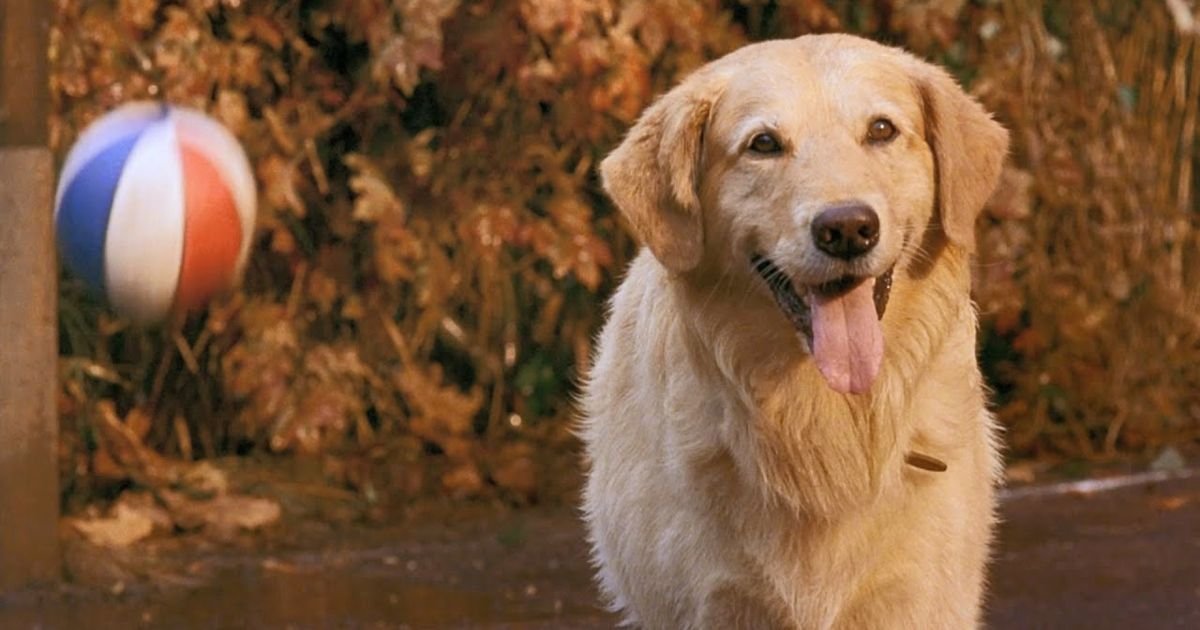
The dog who played Buddy was actually named Buddy. Kevin DiCicco found him as a scraggly stray in the Sierra Nevada in 1989, nursed him back to health, and gradually discovered that this particular dog had an inexplicable affinity for basketball. The trick was less graceful than it looks — a slightly deflated ball covered in olive oil, propelled off Buddy's nose and into the basket — but it was completely real. No CGI, no camera tricks. Roger Ebert apparently assumed it was digital effects, which says less about the movie and more about how low his expectations were going in.

Buddy made his name on AMERICA'S FUNNIEST HOME VIDEOS and David Letterman's Stupid Pet Tricks before Disney came calling. He also made a one-episode cameo as Comet on FULL HOUSE — specifically for a basketball scene with Kareem Abdul-Jabbar, which makes perfect sense.

Buddy was already older than he looked during filming. DiCicco had found him as a stray and never knew his exact age. The production touched up the white on his muzzle for certain shots. By the time the movie came out in the summer of 1997, Buddy had been diagnosed with bone cancer. He had his right hind leg amputated that fall and began chemotherapy. Disney quietly distanced themselves, concerned that a three-legged dog undergoing cancer treatment might upset the children they were marketing the film to. You can't entirely blame them for the logic even if the coldness of it stings.

Buddy died in February 1998, in his sleep. He was ten minutes away from meeting his own puppies.

Kevin DiCicco did genuine good with Buddy's fame. Hospital visits, charity appearances, bringing joy to kids who needed it. That counts for something. But the real story around Buddy is messier than the movie it inspired. There were legal disputes, questions of ownership, a franchise that grew well beyond anyone's original intentions — one DiCicco never really benefited from. As recently as 2024 he was facing homelessness. The man who found a stray dog in the woods and turned him into a cultural phenomenon doesn't own the rights to that phenomenon.

None of this tarnishes Buddy. That's the thing about dogs — they stay pure even when the humans around them get complicated. The contracts, the disputes, the sequels don't touch him. What survives is the image of a golden retriever bumping a basketball into a hoop like it's the most natural thing in the world, and the collective memory of every kid who saw it and believed.

At some point Buddy stopped belonging to one person and started belonging to culture. That's how myth works. The human discovers, the dog performs, the audience believes, and the story detaches from its origin. What defines him is simpler than any of that.

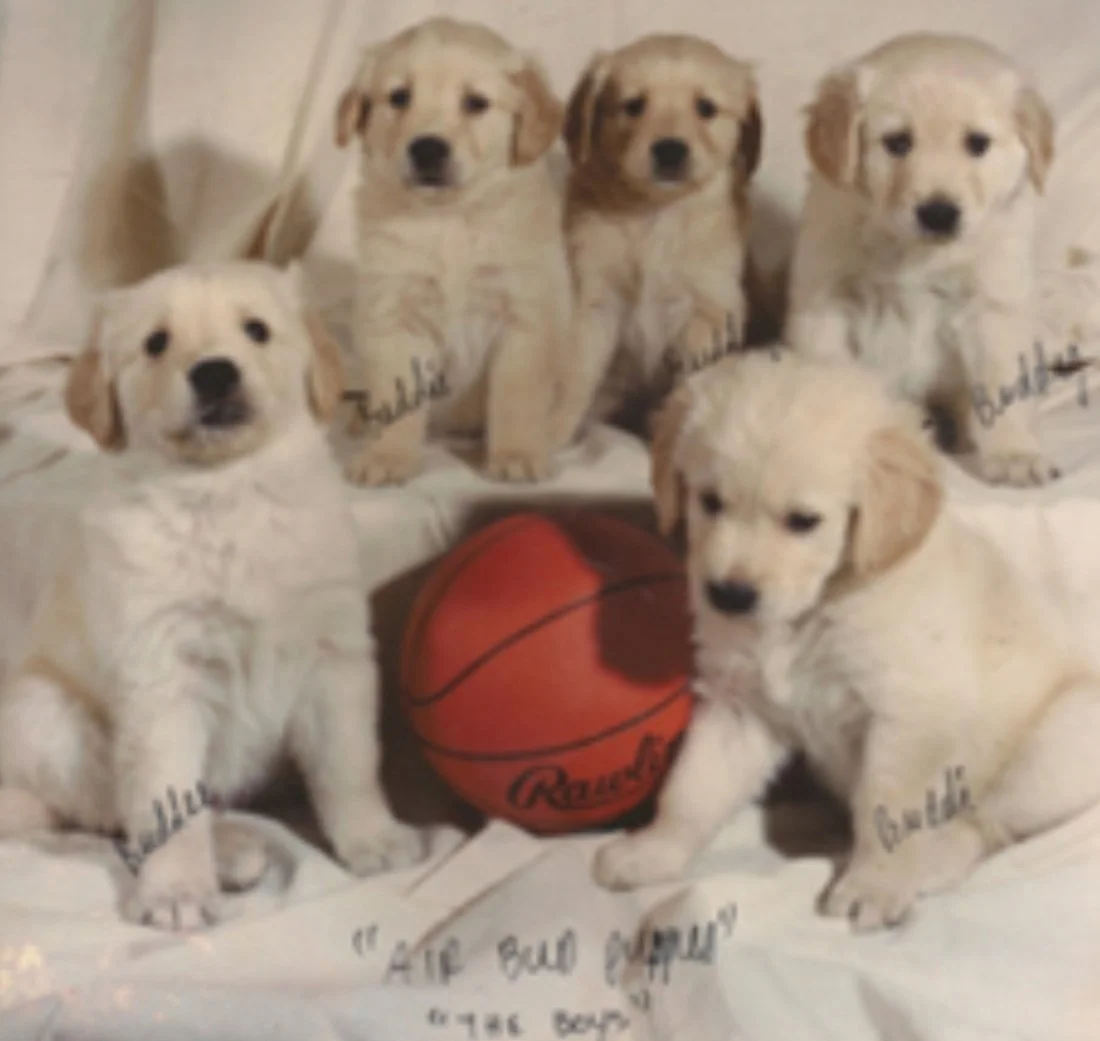
GO, BUDDY! ends with a chapter written from the perspective of Buddy II, one of five golden retriever puppies gathered around a basketball, each one carrying something forward. The game continues. That's not a bad note to end on — for the book, for the dog, or for this review.

Final Verdict: 74 out of 100


Thunderstruck

by Edward Dunn


THUNDERSTRUCK
PG
102 Minutes
Director: John Whitesell
Writers: Eric Champnella, Jeff Farley
Kevin Durant, Taylor Gray, James Belushi


CAST
Kevin Durant      Himself
Taylor Gray         Brian
James Belushi   Coach Amross

BLUE CHIPS, WHITE MEN CAN'T JUMP, ABOVE THE RIM , BLACK AND WHITE, SPACE JAM, HE GOT GAME, HOOSIERS, CELTIC PRIDE, BIG AND HARRY, and TEEN WOLF. What do all these basketball movies have in common?

None of them are as bad as THUNDERSTRUCK.

Brian is a 16 year-old boy who lives within the greater OKC area. While at a Thunder game, he wins a raffle, and gets a chance to shoot the basketball from half court. Brick! He misses the basket, in a most spectacular fashion, knocking the buffalo-headed mascot unconscious.

The next scene is at the funeral of the buffalo mascot. Just kidding, he doesn't die...or maybe he does. The person inside might be a replacement, you don't know.

The next day, all the kids in school make fun of him, because they always have, it goes with the territory of being a dork. This incident makes it much more difficult for him to look like one of those 'cool guys'. The type of guy Isabel Sánchez goes for. And it's too bad because he's really got a crush on her.

You know how this type of movie goes down. We've all seen ROOKIE OF THE YEAR. Well, at least I have.  Brian becomes the world's greatest basketball player.

With all the success of high school basketball, he became a giant prick. His real friends abandoned him. And that Sánchez girl, she wants nothing to do with him.

Kevin Durant's agent notices the NBA baller's moves have mysteriously vanished. There's only one logical explanation: an accidental talent transfer between two people, right after that half-court shot.

The time comes to make things right.  The mascot has to get hit in the head again, to reverse the talent transfer.

The only realistic part of the movie was the basketball coach. I could see Jim Belushi, the person, really coaching high school basketball. After he runs out of ACCORDING TO JIM royalties, he may have to settle down with a regular gig, and get married to someone about as attractive as he is.

THUNDERSTRUCK is a blatant rip-off of the Lil' Bow Wow movie, LIKE MIKE. Surprisingly, LIKE MIKE is not so bad. Mostly, because they used NBA players...that played basketball in the movie. In this film, we don't see nearly enough, real basketball action.

As a player, and a player of basketball, I respect Kevin Durant. There are no hard feelings, from this bitter Sonics fan. I'm just disappointed with him, and some of the decisions he's made.

Final Verdict: 24 out of 100