Air Bud (Retro)

by Edward Dunn


AIR BUD (1997) PG 98 Minutes Director: Charles Martin Smith Writers: Paul Tamasy, Aaron Mendelsohn Kevin Zegers, Michael Jeter, Bill Cobbs CAST Kevin Zegers...Josh Framm Michael Jeter...Norm Snively Bill Cobbs...Arthur Chaney Wendy Makkena...Jackie Framm Eric Christmas...Judge Cranfield Brendan Fletcher...Larry Willingham Norman Browning...Coach Barker Nicola Cavendish...Announcer Stephen E. Miller...Principal Pepper Shayn Solberg...Fog Frank C. Turner...Referee

There are two kinds of people in this world — those who like golden retrievers, and...just kidding, there's only one kind of people.

I should also tell you upfront that before writing this review, I read a 348-page book about the real dog, Buddy. To be fair, at least a third of it is about the author.

I'll admit I tried watching AIR BUD once before and checked out after twenty minutes. The IMDb rating of 5.4 didn't exactly inspire confidence, and I went in looking for immediate absurdity rather than what the movie actually is — a family sports film that isn't in any hurry to earn its premise. That was my mistake, not the movie's.

GO, BUDDY! — the book written by Kevin DiCicco, the man who found and trained Buddy — changed my approach entirely. The real story isn't what you'd expect. He was a scraggly, pinecone-obsessed stray that DiCicco stumbled across in the Sierra Nevada, nursed back to health, and then discovered almost by accident had a peculiar gift for basketball.

The talent snowballed organically — AMERICA'S FUNNIEST HOME VIDEOS, then David Letterman's Stupid Pet Tricks, then Disney. Hollywood didn't manufacture Buddy. It just scaled up something that already existed.

Knowing that going in makes the movie feel less like cynical product and more like a document of something that actually happened to a real animal. That's a better starting point for a review.

AIR BUD opens with a kid who has lost his father and a dog who has lost his dignity. Josh Framm is twelve, quiet, and new to Fernfield, Washington — though you'd pick up on the Pacific Northwest setting less from anything the movie tells you and more from the casual Shawn Kemp references. The grief isn't milked. The movie establishes it, respects it, and then lets the dog do the therapeutic heavy lifting.

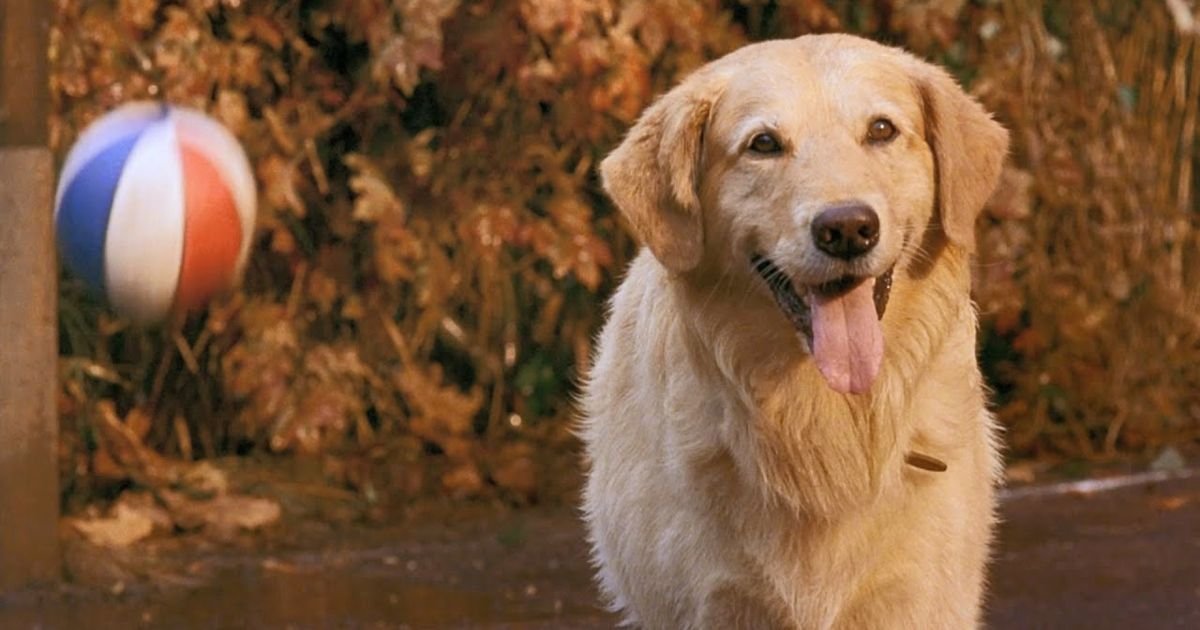
What's refreshing about AIR BUD is how unapologetically sincere it is about all of this. It knows exactly what it is — a movie about a golden retriever who plays basketball — and it never once tries to be anything else. There's no winking at the camera, no meta-commentary, no attempt to justify its own premise. It simply commits, which turns out to be harder to pull off than it looks.

The villain of the piece is Norm Snively, an alcoholic clown who loses Buddy during a disastrous birthday party performance in the opening scene. Michael Jeter plays him with a particular brand of desperation that edges closer to the seedy birthday clown from UNCLE BUCK than broad slapstick. He's not scary exactly, but he's genuinely unsettling in the way that only a failing clown can be. The movie wisely never tries to rehabilitate him. He crashes his truck into a lake while drunk, shows up uninvited to a championship basketball game, and eventually gets his case dismissed by a judge who can barely conceal his contempt. It's a fitting end for a man who opened the film by nearly choking on a plate-spinning stick.

The abusive coach who throws basketballs at children gets fired early enough that the movie doesn't have to spend much time justifying it. In his place comes Arthur Chaney, played by Bill Cobbs, a retired pro who has quietly ended up as the school handyman. The movie doesn't explain how he got there, and it doesn't need to. Cobbs brings enough quiet authority to the role that you fill in the blanks yourself. There's a dignity to the character that the film earns without spelling anything out — a private man with a complicated past who decides to invest in a lonely kid and a dog. He brings genuine warmth to what could have easily been a throwaway mentor role, and he elevates every scene he's in, including a courtroom moment late in the film that works almost entirely because of him.

One of the film's more underrated choices is what it doesn't do. There are maybe three songs in the entire movie, including a track you'd hear at any basketball game, and even the film score barely makes its presence known. For a mid-90s family film, that's almost radical restraint. AIR BUD trusts the story and the performances to do the work. Deliberate or not, it was the right call.

AIR BUD also gets the ratio right. There is enough dog without it ever overwhelming the human story, and enough human story without the dog feeling like an afterthought. That balance is harder to achieve than it sounds — either the animal becomes a gimmick or the humans overwhelm it. Here the two storylines breathe together. Josh's grief arc has room to develop alongside Buddy's presence rather than being swallowed by it. The chemistry between Kevin Zegers and Buddy feels genuine, and a lot of it is. Much of the film is simply the two of them playing together, loosely edited but emotionally real.

If the film has a structural weakness it's that the basketball stakes never quite build the way they should. The championship game arrives almost without warning — announced in a single throwaway line from a commentator — and the movie hasn't done enough work to make you feel the journey to get there. Ironically, the original concept had Buddy helping a struggling team reach the finals through a proper playoff arc. That version of the film would have given the basketball more weight. What we get instead is competent but a little thin. Though there's a case to be made that this was partly intentional — the abusive coach who opened the film was obsessed with winning, and replacing him with Chaney meant shifting the value system away from trophies and toward something less measurable. A full championship run might have sent the message right back in the wrong direction.

Here's where the review takes a turn.

The dog who played Buddy was actually named Buddy. Kevin DiCicco found him as a scraggly stray in the Sierra Nevada in 1989, nursed him back to health, and gradually discovered that this particular dog had an inexplicable affinity for basketball. The trick was less graceful than it looks — a slightly deflated ball covered in olive oil, propelled off Buddy's nose and into the basket — but it was completely real. No CGI, no camera tricks. Roger Ebert apparently assumed it was digital effects, which says less about the movie and more about how low his expectations were going in.

Buddy made his name on AMERICA'S FUNNIEST HOME VIDEOS and David Letterman's Stupid Pet Tricks before Disney came calling. He also made a one-episode cameo as Comet on FULL HOUSE — specifically for a basketball scene with Kareem Abdul-Jabbar, which makes perfect sense.

Buddy was already older than he looked during filming. DiCicco had found him as a stray and never knew his exact age. The production touched up the white on his muzzle for certain shots. By the time the movie came out in the summer of 1997, Buddy had been diagnosed with bone cancer. He had his right hind leg amputated that fall and began chemotherapy. Disney quietly distanced themselves, concerned that a three-legged dog undergoing cancer treatment might upset the children they were marketing the film to. You can't entirely blame them for the logic even if the coldness of it stings.

Buddy died in February 1998, in his sleep. He was ten minutes away from meeting his own puppies.

Kevin DiCicco did genuine good with Buddy's fame. Hospital visits, charity appearances, bringing joy to kids who needed it. That counts for something. But the real story around Buddy is messier than the movie it inspired. There were legal disputes, questions of ownership, a franchise that grew well beyond anyone's original intentions — one DiCicco never really benefited from. As recently as 2024 he was facing homelessness. The man who found a stray dog in the woods and turned him into a cultural phenomenon doesn't own the rights to that phenomenon.

None of this tarnishes Buddy. That's the thing about dogs — they stay pure even when the humans around them get complicated. The contracts, the disputes, the sequels don't touch him. What survives is the image of a golden retriever bumping a basketball into a hoop like it's the most natural thing in the world, and the collective memory of every kid who saw it and believed.

At some point Buddy stopped belonging to one person and started belonging to culture. That's how myth works. The human discovers, the dog performs, the audience believes, and the story detaches from its origin. What defines him is simpler than any of that.

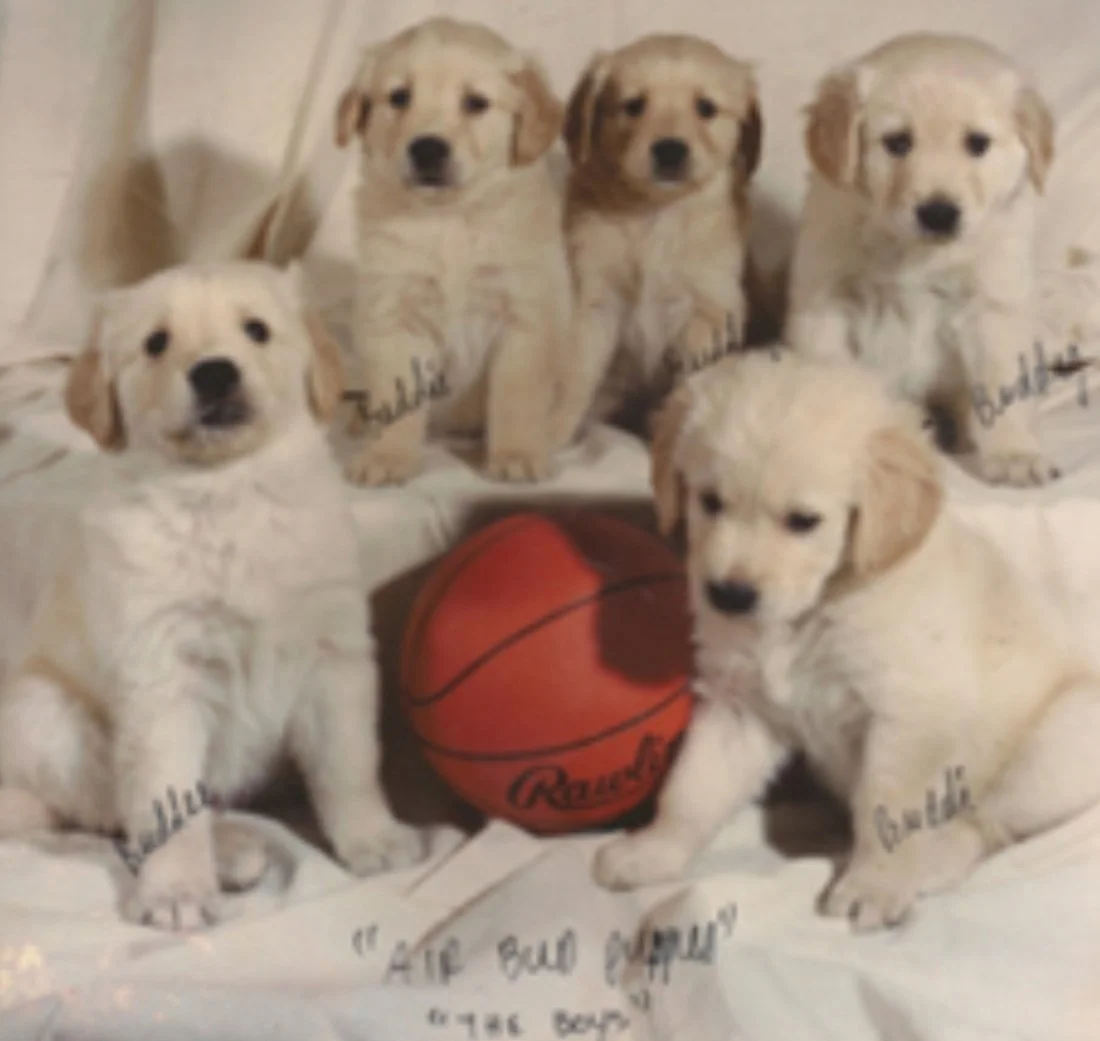
GO, BUDDY! ends with a chapter written from the perspective of Buddy II, one of five golden retriever puppies gathered around a basketball, each one carrying something forward. The game continues. That's not a bad note to end on — for the book, for the dog, or for this review.

Final Verdict: 74 out of 100


The Sandlot (Retro)

by Edward Dunn


THE SANDLOT (1993) PG 101 Minutes Director: David Mickey Evans Writer: David Mickey Evans CAST Tom Guiry...Scotty Smalls Mike Vitar...Benny Rodriguez Patrick Renna...Hamilton "Ham" Porter Denis Leary...Bill James Earl Jones...Mr. Mertle Art LaFleur...Babe Ruth

“I am Hercules.” — Kevin Sorbo

The Sandlot is one of those movies that feels smaller when you’re a kid and larger when you’re an adult. What once felt like nothing more than a string of jokes and bits slowly reveals itself as something gentler — a memory of a summer that mattered, even if no one knew it at the time.

The narration sets the tone. It’s Christmas Story–adjacent, but with a key distinction: Ralphie grows up still wrestling with his childhood. Scotty Smalls grows up simply grateful for his. There’s no bitterness in the voiceover—only fondness.

That tone brings the movie closer to a family-friendly Stand by Me. Same idea—kids on the brink of change, one last shared adventure—but filtered through humor, exaggeration, and baseball. And even then, it’s not really about baseball. Baseball is the setting, not the point. This is a movie about kids hanging out one last summer before their lives quietly shift out of reach.

You see that shift everywhere. The legend of the Beast is cartoonish and funny, a child’s myth inflated into something operatic. The s’mores bit still works. The chewing-tobacco-on-the-carnival-ride scene remains perfectly disgusting and impeccably timed. Everything is heightened, but it’s emotionally honest—how summers felt, not how they literally happened.

The adults mostly exist as pressure. Bill, Smalls’ stepdad, radiates pure Denis Leary energy. You know he’s going to give that kid a black eye; the only surprise is how.

Even the stuff that could have aged poorly mostly doesn’t. The pool make-out scene lives in a gray area, sure, but it never feels creepy. If this movie had been made five years earlier, it’s easy to imagine that scene being played differently. Instead, the joke stays on Squints, keeping it silly over leering. That restraint matters.

Hercules—the Beast—becomes a central emotional anchor for the movie. He’s terrifying, misunderstood, and ultimately just a lonely old dog with a bad reputation. For anyone who grew up with an outdoor dog—the kind that growls at strangers but licks your face when you get home—it rings true. And mercifully, this is a movie with the right amount of dog in it: memorable, meaningful, never emotionally exploitative.

Art LaFleur’s brief turn as Babe Ruth is one of those performances that stays with you. He shows up for maybe three minutes, delivers a handful of lines with the perfect mix of gruff kindness and faint impatience, and then vanishes. But those minutes quietly reframe everything that follows. He’s not trying to steal the spotlight—he’s just there to hand it back to the kids. That understatement is what makes him so good, and it’s why, even now, I catch myself smiling every time the Bambino walks out of the fog.

I was surprised by how teary the ending made me. Nothing especially tragic happens—none of the boys meet some grim fate, no one gets killed breaking up a fight at a McDonald’s—and yet the emotion sneaks up all the same. Maybe it’s the exact balance the movie strikes between sweetness and sincerity, with just a trace of melancholy underneath. Even Hercules—or the Beast, as he’s more often called—is revealed, just before the epilogue, to be a mere mortal when the fence collapses on him. Later, we’re told he lives to be 199 in dog years, which sounds legendary until you realize he’s still the only character who actually dies. Or maybe the sadness comes from something simpler: the knowledge that once the movie ends, you don’t really get to see these kids—these newfound celluloid friends—again. Like childhood summers themselves, they don’t end in tragedy. They just end.

The epilogue seals it. “Heroes get remembered, legends never die” works because the movie earns it. The futures aren’t tragic, but they aren’t fantasy either. Benny Rodriguez makes it all the way, the way you always hoped he would. The rest don’t—and that’s the point. Bertram gets really into the ’60s. Life happens. It’s the exact right balance of bitter and sweet—proof that a family movie doesn’t need to be a bummer to be honest, and doesn’t need to be a fantasy to be comforting.

If anything, The Sandlot improves with age. As a kid, it’s funny and exciting. As an adult, it’s generous. It’s the kind of memory that sneaks up on you years later—when you’re old enough to see just how much that one summer really meant.

Final Verdict: 92 out of 100

Sidenote: Postscript


Necessary Roughness (Retro)

by Edward Dunn


NECESSARY ROUGHNESS (1991)
PG-13
108 Minutes
Director: Stan Dragoti.
Writers: Rick Natkin, David Fuller

CAST
Scott Bakula...Paul Blake Hector Elizondo...Ed Gennero Robert Loggia...Coach Wally Rig Larry Miller...Dean Phillip Elias Sinbad...Professor Andre Krimm

MAKING THE QUANTUM LEAP

Less preposterous than MAJOR LEAGUE III: BACK TO THE MINORS, where Scott Bakula played a baseball player in his 40s; NECESSARY ROUGHNESS is about a 34-year old who gets to play a college quarterback. All because of a technicality. I think it's the same technicality that allows angels and golden retrievers to play competitive football.

Texas State University has a shortage of eligible players. So all the Armadillo players have to play offense and defense.

BACK TO SCHOOL: RODNEY DANGERFIELD STYLE

The cast of 90210 were all pretty old, but  there was only one actor in their 30s, Andrea, and she wasn't around very often either (I know, technically, she was only 29 when the show started...freshman year). But in this movie, just when you came to terms with the 34-year-old quarterback. We are asked to suspend disbelief once again.  Sinbad shows up, he's a chemistry professor, working on a PHD, yet he has enough stamina to play offensive, and defensive football.

GARBAGE PICKING FIELD GOAL KICKING PHENOMENON

Kathy Ireland is the greatest actor...ever. Yeah, she's a girl, and a field goal kicker...get used to it.

Larry Miller plays the classic college dean as only he can play. Like he did in those NUTTY PROFESSOR films. This dean is always menacingly, watching the football team. That asshole thinks academics are more important than sports. Don't worry though, he gets his. Right before the credits roll, a gun was pointed at his head (that's not a joke).

Rob Schneider made a cameo. Well, it was more like several cameos. But things are not as bad as they seem. I can deal with a pre-DEUCE BIGALOW Rob Schneider. Because he never attempts to make any jokes, from what I can tell anyway.

MEN OF A CERTAIN AGE

In this role, Scott Bakula looks more ridiculous than Payton Manning in a Papa John's commercial. With his jersey tucked into his jeans. Nonetheless, this movie has its moments, but not too many. I think it was because Scott Bakula starred in QUANTUM LEAP, while this film was getting made.

'DILLOS...MORE LIKE DILDOS

Football movies are either good or very bad. For every FRIDAY NIGHT LIGHTS, or VARSITY BLUES, you have terrible counterparts. Like THE REPLACEMENTS, or WILDCATS. But NECESSARY ROUGHNESS performs a rare feat, and manages to keep things at the 50-yard line, being neither good, nor bad, nor memorable.

Final Verdict: 50 out of 100


Goon

by Edward Dunn


"I don't have a thing. Like you have your show; my dad and my brother have their doctor thing. I don't got a thing. Everybody's got a thing but, me." He's a highlander, by God! -Highlander (1986) The Halifax Highlanders are part of a semi-professional hockey league. He was offered the job of enforcer, after beating up a hockey player, that went into the stands (Ron Arrtest-style). Doug Glatt (Scott) is a security guard for a local bar, just outside of Boston. You wouldn’t know that his dad is Jewish, a doctor, or Eugene Levy. "I get to wear a uniform that doesn't have the word 'security' on it."
Read More

Real Steel

by Edward Dunn


REAL STEEL
127 minutes
PG-13
Writers: Writers: John Gatins, Dan Gilroy
Director: Shawn Levyr
Hugh Jackman, Evangeline Lilly, Dakota Goyo


The wars of the future will not be fought on the battlefield or at sea.
They will be fought in space, or possibly on top of a very tall
mountain.  In either case, most of the actual fighting will be done by
small robots.  And as you go forth today remember always your duty is
clear:  To build and maintain those robots.  Thank you.

- -Military School Commandant's Graduation Address, THE SIMPSONS, The Secret War of Lisa Simpson


 Crush! Kill! Destroy!

BATTLEBOTS aired for five seasons, a show aptly suited for Comedy Central—the show was a complete joke. Robots fighting one another: sounds like Transformers. It is not assure you, this isn't similar to any of TRANSFORMER movies. If anything, I would put it into the same category as those SHORT CIRCUIT movies.

Up and Atom!

The year is 2020, we see one thing clearly: boxing kills brain cells, so fighting (with gloves) is illegal.  In this future, man and machine bond in an almost metaphysical way; a bond that transcends the confines of flesh and blood. It's called robot boxing: it's like combining Nascar, Dance Dance Revolution, and the World of Warcraft. Hmmm...you know, I can kind of see what the appeal would be.

Max Kenton (Goyo) is eleven years old, he reminds me of a young Annakin Skywalker . Charlie Kenton (Jackman), absentee father, down on his luck. Deep down, he really wants to rekindle his relationship with his son.

Max challenges WRB champion, Zeus, designed by Tak Mashido (Yune): 'I challenge Zeus to a fight anytime any place anywhere, you name it, we'll be there.'
 
The final battle is between Zeus and Atom. Fighting Zeus, that would make him a modern-day Prometheus figure (where's Hercules when you need him?)...yeah, that was a dork joke.

Bailey Tallet (Evangeline Lilly) runs the boxing gym of her late father. She is an unnecessary character; I found her enthusiasm for robot boxing to be somewhat questionable. Since Lost, Evangeline Lilly (aka, Kate or Freckles) has only done shampoo commercials. It was good to see her back again, definitely a step up from those commercials.

This movie is remarkably similar to OVER THE TOP (1987). Sure they changed a few key details, no arm wrestling, truck driving, a few characters. The mother dies, troubled relationship with father, the national championship. It's like there is a book called, 'Making Unoriginal Movies...the Lazy Way'; except STALLONE read the book-on-tape first.

   1. "Do you really think you can make up for ten years in 2 to 3 days?"
   2. "He's staying with me! You tell him that! You tell him!"
   3. "I wanted you to fight for me that's all I ever wanted. "

Which of these quotes is from OVER THE TOP, and which is from REAL STEEL? Check the bottom of my review, the answers may surprise you.

This film has many flaws, but mainly, I just didn't care about any of the characters. I suppose that is almost expected in a movie about robots.

If you would like to see a film about robot fighting; I would suggest TERMINATOR II: JUDGEMENT DAY. From what I hear, it's a real snooze-fest.

Shawn Levy, the director of this film, has not made anything great since the TV series, THE SECRET WORLD OF ALEX MACK(1996).

A family film, and a popcorn flick. REAL STEAL is reel-to-reel goodness, a movie the entire family can tolerate.  Yes, REAL STEEL is a real steal; after viewing it, you'll demand your money back

Final Verdict: 65 out of 100

Quiz Answers

   1. Do you really think you can make up for ten years in 2 to 3 days? OVER THE TOP
   2. He's staying with me! You tell him that! You tell him!" REAL STEEL
   3. I wanted you to fight for me that's all I ever wanted. " REAL STEEL


Moneyball

by Edward Dunn


So why was this movie made?
My Theory

Brad Pitt is secretly envious of baseball managers, they don't have to care of 10 adopted children.
 
They say star athletes make bad coaches. This man proves the rule, Billy Beane turned down a scholarship to Stanford to play professional baseball. He failed miserably, yet he retains his romantic attachment to this game.  

"You sir, have the the boorish manners of a Yaley."

Peter Brand, an Ivy Leaguer, who has never really played the game, all he has is a degree in economics. A poster of Plato hangs in his bedroom. He believes in a detached, dispassionate, scientific approach to team building; which is challanging; baseball is like time, the variables are ever changing.

Read More

Warrior

by Edward Dunn


Without some damn war to fight, then the warrior may as well be dead, Stallion!
-Apollo Creed, Rocky IV

No rules, just right, MMA is the Outback Steakhouse of combat sports. Mixed Martial Arts has gained some legitimacy, it used to be a joke, now it's just less of one.

Our story takes place in Pittsburgh. Brothers, Brendan (Edgerton) and Tommy (Hardy), are about to duke it out in the most epic of battles, the battle of life.


...And a brother is born for adversity.
Proverbs 17:17

Brenden (Edgerton, used to fight for a living, but he gave that up for the sake of his family. It's a tough choice we all face eventually: should I teach high school physics or fight in the octagon?

Read More