Little Giants (Retro)

by Edward Dunn


LITTLE GIANTS (1994) PG 107 Minutes Director: Duwayne Dunham Writer: James Ferguson Rick Moranis, Ed O'Neill, Shawna Waldron
CAST
Rick Moranis…Danny O'Shea
Ed O'Neill…Kevin O'Shea
Shawna Waldron…Becky "Icebox" O'Shea
Devon Sawa…Junior Floyd
Todd Bosley…Jake Berman
Sam Horrigan…Spike Hammersmith
Brian Haley…Mike Hammersmith
Mary Ellen Trainor…Karen O'Shea
Susanna Thompson…Patty Floyd
Robert Prosky…Grandpa O'Shea

LITTLE GIANTS arrives with everything a 1994 family sports comedy is supposed to have. Two brothers, a misfit team, a girl who can play better than the boys, a big game, and a trick play with a name so good the Carolina Panthers ran it in an actual NFL game seventeen years later. The premise is solid. The cast is better than solid. Rick Moranis and Ed O'Neill are doing real work here, carrying the film with the kind of commitment that makes you want it to succeed. The problem is that LITTLE GIANTS is a movie that correctly diagnoses what it wants to say and then keeps prescribing the wrong cure.

The setup is this: Kevin O'Shea is a Heisman Trophy winner who never left Urbania, Ohio, because Urbania never stopped needing him to be its Heisman Trophy winner. He coaches the local peewee Cowboys the way he does everything — by winning, and by not particularly caring who gets left out in the process. His younger brother Danny owns a gas station. When Kevin cuts the misfit kids from tryouts — including his own niece Becky, who is demonstrably the best player on the field — Danny forms a rival team from the leftovers and challenges Kevin to a playoff game to determine who represents the town. This is not, the film would like you to believe, a completely insane response to the situation. Danny is a man who has spent his entire adult life in the shadow of his brother's mythology, and the Little Giants are his first real swing at it. You understand why he does it. You also understand why, in real life, two brothers with a family member caught in the middle would have talked it out. LITTLE GIANTS needs them not to, so it doesn't let them.

Moranis plays Danny like a man who never quite found his way out of his brother's shadow, something the film sets up clearly even if it doesn't always know what to do with it. This is a man who ran the class projector while his brother ran for touchdowns, who stayed in the same town, kept the same gas station, and spent his adult life living adjacent to a mythology that had no room for him. The gas station isn't just his business. It's where he went when everything else closed off. Moranis is a reactive performer by instinct — he's at his best responding to things larger than himself — and here that instinct is exactly right, because Danny has been responding to Kevin his entire life. The film's funniest moment is a prank call Danny makes to the state police after catching Kevin spying on practice. He places it as Thelma May Rogers, 86, of Urbania — who does not exist and is performed flawlessly.

State police? Oh, thank God. This is Thelma May Rogers. I'm 86. I live in Urbania. There are two men down the bridge from the Shell station...in the bushes spying on some kids. We're all so upset. I don't think men their age should be parading around in their underwear. Please, hurry.

Completely in character, it tells you everything about a man who has spent forty years finding indirect routes around his brother rather than through him. What the performance can't quite solve is the script's reluctance to let Danny's wound breathe — it knows what's wrong with him, it just keeps reaching for the football game as the answer when the real answer is something quieter, something the scoreboard can't deliver. Danny asking Patty Floyd to dinner in the final thirty seconds — a woman who never left Urbania either, whatever the intervening years held for both of them — tells you more about who he is than anything that happens on the field. It still took a peewee football game for him to finally ask.

Becky "Icebox" O'Shea is the most interesting character in LITTLE GIANTS and the one the film most consistently lets down. She's Danny's daughter, which is the script's smartest structural decision — it means her talent didn't come from the football obsessed branch of the family, that she arrived at it on her own terms, that she belongs to herself before she belongs to the story. Shawna Waldron plays her with a naturalness that the film establishes in the first act and then slowly squanders. The trouble arrives not from Junior Floyd, whose comment about cheerleading is casual enough to be almost a joke, but from Kevin. It's her uncle who sits her down and tells her explicitly that a quarterback is going to want a cute girl, not a teammate. That's the binary. That's what she acts on. The problem isn't that Becky would never have these feelings. The problem is that the film hasn't done the work to make you believe they would override everything she is — and the irony the film never registers is that Junior never actually asked her to change. Kevin told her what boys want, and he was wrong about this particular boy. You're not worried during the cheerleader detour. You're just waiting for her to put her jersey back on. And when she does return — because of course she returns — it's because the team needs her, which is the external motivation when the scene required an internal one. The better version of that moment is Becky deciding something about herself. This version is Becky getting a phone call.

The deeper problem with LITTLE GIANTS is that it's running three separate films simultaneously and doesn't quite know how to make them talk to each other. There's the film about Danny and Kevin, two brothers whose entire relationship is an unresolved argument about who gets to matter. There's the film about Becky, a girl trying to figure out who she is when the people around her keep telling her she has to choose. And there's the film about the misfit kids, the underdogs who deserved a chance and finally got one. In the best version of this movie those three things are feeding each other — Becky's arc deepens the Danny material, the kids' dignity gives the game real stakes, the brothers' reconciliation means something because everyone else's story has gotten there first. Instead they run alongside each other, occasionally passing in the hallway, resolving independently in the final ten minutes as if the film suddenly remembered it had several threads to close.

It doesn't help that the production was literally split between two directors, the second brought in to finish the football sequences after the first fell behind. Or that the NFL's financing arrived late and reshaped the film around branding that had nothing to do with the story it was trying to tell. There is also the matter of John Madden, who arrives at practice on his bus — Madden famously refused to fly — having taken a wrong turn on the way to Canton. He gives the kids a pep talk, Emmitt Smith and several other NFL players materialize alongside him, and then they leave. The film presents this without embarrassment. It is the most expensive non sequitur in the movie, and LITTLE GIANTS plays it completely straight. The seams are visible because there were actual seams.

None of this is the fault of the two men at the center of it. Ed O'Neill plays Kevin with a quiet and underappreciated intelligence — this is not Al Bundy with a Heisman Trophy, though the surface resemblance is there. The difference is Kevin was never humbled. He peaked, and the peak held, and he has been living inside that fact ever since with the genuine ease of a man who never had reason to question himself. O'Neill plays the obliviousness as something close to innocence, which is the right call — Kevin isn't cruel, he just hasn't developed the muscles you only build through losing. The "you're not pretty, you're beautiful" scene is the film's clearest evidence of what O'Neill can do when the script opens a door. It arrives without announcement, lands completely, and is gone before you can examine it too closely. That's the whole performance in miniature. Moranis, meanwhile, is doing something quieter and in some ways harder — playing a man whose damage is so internalized it barely shows on the surface, which makes the work almost entirely about what he withholds. Together they are doing exactly what the film needs. The problem is that even two performers working at that level can't fuse material the script has left deliberately separate. They just weren't given it.

LITTLE GIANTS wants you to believe something specific. It wants you to believe that the kid who couldn't catch, couldn't run, couldn't keep up — the one who got cut, who got laughed at, who sat under the bleachers — belongs out there anyway. That belonging isn't conditional on performance. That showing up is its own form of winning. It's a generous argument, and the film makes it with enough sincerity that you want to meet it halfway. Danny's halftime speech works. Watching these kids take the field again works. The film is, in those moments, trying. The trouble is that youth sports has its own ideas about belonging, and they are considerably less generous than the ones LITTLE GIANTS is selling.

I was never a good athlete. Baseball, track, swimming — it didn't matter the sport, I was reliably the worst person on whatever team I was on. Not because of size particularly, mostly a fundamental lack of coordination that no amount of showing up seemed to fix. In fifth grade I was on a little league team that made the playoffs. The rest of the team was genuinely good. I was the oldest kid on the roster and the least useful, which is its own particular humiliation. When the playoff game arrived the coach sat me for the entire game, which was the correct decision. At some point during the game I reached for a fruit punch Powerade from the cooler on the sideline. There was plenty — one of those five gallon dispensers, enough for everyone. The coach told me the Powerade was for kids who were playing in the game. I still drink a lot of Powerade. But I no longer drink the fruit punch variety, not because of some long ago trauma. It's the flavor. It was never good.

Ed O'Neill does what he can with the ending the film gives him. Kevin's turn — handing over the dealership, proposing the merger, the water tower compromise — happens quickly enough that you're asked to accept it on faith rather than evidence. The film has spent ninety minutes establishing that Kevin is a man who doesn't yield, and then he yields, and the movie treats this as earned because the scoreboard says so. It isn't quite. The handshake between the brothers is the real resolution, the thing the film was always building toward, and it arrives as an afterthought after the confetti. O'Neill plays it with enough quiet that you almost believe it. Almost.

There is a better version of LITTLE GIANTS sitting right there in the material — one where the mother's absence carries weight, where Karen fills the gap, where Becky returns to the field because she decides to, not because she's summoned, where the brothers' reconciliation grows out of something true instead of a trick play. You can see it in flashes: the "little princess" moment, O'Neill's quiet "you're beautiful," Moranis finding dignity in a man who has spent his life being the lesser brother. The actors are ready for that film. The script isn't, and neither is the production around it.

It's a funny image: a grown man picking apart a film made for children. But the truth is, I would have liked this even less as a child. I'm far less cynical now.

What's left is a movie that understands its problem and keeps reaching for the wrong solution — a story about belonging that still laughs at the kids it's defending, a story about brotherhood that resolves decades of damage in an afternoon. It gets the fumblerooski right. It misses the harder things.

Final Verdict: 58 out of 100

1995 Mill Creek Scorpions MVP Medal

Sidenote: This is the MVP medal from game 14 of that little league season. The team was the Mill Creek Scorpions. Those things were essentially participation trophies — every team gave them out for something. I earned mine by getting the only hit I would record all year in the regular season, a pop fly that spun out of the first baseman's glove. I knew I was lucky. The first baseman knew I was lucky. The only things I was reliably good at were getting walked and stealing bases, neither of which requires you to actually hit anything. I was very proud of that medal anyway. I wore it like a necklace, waltzing around the aisles of Safeway.


My Blue Heaven (Retro)

by Edward Dunn


MY BLUE HEAVEN (1990) PG-13 97 Minutes Director: Herbert Ross Writer: Nora Ephron Steve Martin, Rick Moranis, Joan Cusack

CAST
Steve Martin…Vincent "Vinnie" Antonelli
Rick Moranis…Barney Coopersmith
Joan Cusack…Hannah Stubbs
Melanie Mayron…Crystal Rybak
Carol Kane…Shaldeen
Bill Irwin…Kirby
William Hickey…Billy Sparrow
Deborah Rush…Linda
Daniel Stern…Will Stubbs

"The beginning of the story in which I move to a small community in the middle of nowhere and my marriage breaks up."
— VINNIE ANTONELLI, MY BLUE HEAVEN

There is a specific kind of movie that isn't quite hilarious but is almost impossible to stop watching. MY BLUE HEAVEN is that movie. It moves with the confidence of a man who tips everyone he meets — not because the service was exceptional, but because that's simply how things are done. You go with it. You don't scrutinize the logic. You let the charm do its work.

The film drops Vincent "Vinnie" Antonelli, a Brooklyn mob figure freshly entered into the federal witness protection program, into the sun-bleached suburban nowhere of Fryburg, California. His handler is Barney Coopersmith, an FBI agent whose entire personality is a system of routines — haircut on the eleventh of the month, oil change on the second Tuesday — and, in every measurable way, is the wrong man for this job. Vinnie proceeds to commit grand theft auto, credit card fraud, hijacking, and — somehow — bigamy. The community makes him Man of the Year.

The center of all this is a Steve Martin performance unlike most of his work. Martin's default mode — even in his best films — is a performer who never quite lets you forget you're watching Steve Martin. Here, that's not the case. Vinnie feels less like a persona and more like a character.

The key is that Vinnie isn't a realistic Italian-American criminal. He's something closer to a Godfather's Pizza commercial mobster — all surface signifiers, charm, and double-breasted suits, a type that exists almost entirely in popular culture rather than in reality. The accent, the philosophy of overtipping, the complete absence of self-consciousness about the criminal behavior — Martin plays it with total conviction. He's not winking at the artificiality. He believes in Vinnie the way Vinnie believes in overtipping.

In most of his films, Martin is presenting a version of himself. Here, for once, he seems to be playing someone else entirely.

Rick Moranis, fresh off HONEY, I SHRUNK THE KIDS, is Barney Coopersmith, the FBI agent assigned to keep Vinnie out of trouble and out of the newspapers. It is, by definition, a losing assignment. Barney is a man so thoroughly defined by procedure that he has nothing left over for actual living — his wife leaves him in the first act for a relief pitcher, and the movie treats this as less a tragedy than a logical outcome. What makes the performance work is that Barney never becomes pathetic. He's earnest in a way that's genuinely likable, and Moranis finds the dignity in a man who is perpetually one step behind everyone else in the room.

It's worth noting that Moranis would revisit the name Barney four years later in THE FLINTSTONES (1994). Whether Barney Coopersmith or Barney Rubble represents the higher artistic achievement is a question best left to future scholars.

The supporting cast is, by any reasonable measure, absurdly well-stocked. William Hickey, Deborah Rush, Carol Kane, Daniel Stern — the movie is littered with character actors who bring texture and specificity to roles that don't always give them enough to do. It's one of MY BLUE HEAVEN's defining qualities and one of its genuine frustrations. The ensemble gives the movie a richness it wouldn't otherwise have, but it keeps introducing interesting people and then not quite knowing what to do with them.

Kane in particular feels like a missed opportunity. She plays Shaldeen, a woman Vinnie meets in the frozen food section and marries in Reno shortly thereafter — which is, in the context of this movie, a perfectly reasonable timeline. She's warm and funny in every scene she's in. The problem is there aren't enough of them.

Melanie Mayron is Crystal, the police officer who escapes the courtroom shootout with Vinnie, ends up at the construction site of his little league park, and eventually has his child. It's a lot to accept. The movie doesn't linger on how any of this happened, and it's probably better that way.

Joan Cusack plays Hannah Stubbs, the assistant district attorney who spends most of the movie arresting Vinnie for things he more or less did. She's the only character who consistently refuses to be charmed by him, which makes her indispensable — without Hannah, the movie is just Vinnie delighting everyone he meets, which is pleasant but dramatically inert. Cusack was 27 or 28 during production and reads considerably older, which is less a criticism than an observation about the role itself: Hannah is a woman who has been professionally competent for so long it's become her entire personality. The movie is quietly on her side even while routing around her. She's right about almost everything. She just loses anyway. Her eventual romance with Barney works because it's built on genuine antagonism rather than manufactured misunderstanding. They actually disagree about fundamental things, and slowly, reluctantly find common ground.

The movie's best relationship isn't romantic. It's the one between Vinnie and Barney, which develops less through deliberate effort than through sheer proximity. Vinnie isn't trying to fix Barney. He just lives the way he lives, and Barney gets pulled along. The wardrobe intervention in the New York hotel room isn't a life lesson — it's a tailoring concern. The merengue scene at the club doesn't announce itself as a turning point. Barney doesn't want to dance, then he's dancing badly, then he's actually dancing, and the movie is smart enough to let it happen in the background of other things. By the end, Barney has loosened without ever being told to. It's the closest thing the movie has to an actual arc, and it's delivered so lightly it's easy to miss.

Here's something I missed across many viewings: MY BLUE HEAVEN has a structure. Eight title cards divide the movie into chapters, each written in Vinnie's voice. The beginning of the story in which I move to a small community in the middle of nowhere and my marriage breaks upI get arrested for no reason whatsoeverAs I am not trained for anything else, I re-embark on my career. These aren't chapter headings. They're a man editing his own life into something more palatable. The selective memory, the consequence-free arc, the everyone-loves-him ending — that's not the movie being sloppy about logic. That's Vinnie narrating. Of course nobody holds him accountable. He's the one telling the story.

It's a quietly sophisticated structural joke for a movie that doesn't otherwise advertise its sophistication. Nora Ephron hides it in the architecture.

I have seen MY BLUE HEAVEN 102 times. This requires some explanation.

In the early 1990s, my parents worked a lot. Which left my older brother, my older sister, my younger sister, a dachshund named Butchie, and me, more or less unsupervised for significant stretches of time. We had HBO. We did not have a VCR. My older brother, roughly seven years my senior, was nominally in charge, which is to say he was a teenager in over his head. None of this was his fault. When MY BLUE HEAVEN came on, we watched it. When it came on again, we watched it again. This is not nostalgia. This is just what happened when you had cable television, no game console, and nothing better to do.

100 of those viewings happened before I was old enough to notice the title cards. The additional two were for this review. On the second of those viewings, I finally caught what Ephron had been doing all along. Vinnie wasn't just the protagonist. He was the author.

MY BLUE HEAVEN was written by Nora Ephron, who grew up in Los Angeles in a community of displaced New Yorkers — screenwriters mostly, people who had traded Manhattan for the suburbs and never quite stopped noticing the difference. It's not hard to see where Vinnie came from. Ephron knew that displacement from childhood: the cultural bewilderment, the relentless pleasantness, the inability to find a decent meal.

MY BLUE HEAVEN is not a great film. It's a little off, a little artificial, and very specific — which is more than can be said for most comedies that came and went in the same era without leaving a mark. A lot of movies are cleaner, tighter, more correct. They're also interchangeable. This one isn't.

Hannah announces Vinnie as Fryburg's Man of the Year with full enthusiasm and no hesitation. The last holdout, the one person who spent the entire movie arresting him for things he actually did, delivers the verdict without a trace of irony. By that point, the film no longer needs to justify it — resistance feels like a formality the story has already moved past.

Vinnie ends up exactly where he always was going to end up — holding his child, looking out over the little league park he built, completely at ease with how things have turned out. It's absurd, and somehow it feels earned. He offers what amounts to his thesis statement: sometimes I even amaze myself. He means it. Of course he means it. It's his book.

It's worth watching once. Not 102 times.

Final Verdict: 62 out of 100


Milk Money (Retro)

by Edward Dunn


MILK MONEY (1994) PG-13 110 Minutes Director: Richard Benjamin Writer: John Mattson Melanie Griffith, Ed Harris, Michael Patrick Carter CAST Melanie Griffith...V Ed Harris...Tom Wheeler Michael Patrick Carter...Frank Wheeler Malcolm McDowell...Green Anne Heche...Betty Casey Siemaszko...Joe Philip Bosco...Judge

The comedy section at Blockbuster on a Friday afternoon was its own kind of purgatory. The good movies were already gone, and you were left staring at everything that remained, trying to convince yourself that something on that wall was worth the trip back by Tuesday. MILK MONEY was almost certainly on that wall every single time — not in the new releases, just sitting in the regular comedy section at the five-day price, practically begging to be rented. I can't tell you the specific Friday, or what I ended up taking home instead. But I'm a hundred percent certain I looked at that box, decided against it, and moved on. In 2026, I finally sat down with it. Twice. The second viewing was a mistake.

MILK MONEY presents its premise with a confidence that borders on oblivious. Three middle-school boys pool their lunch money to hire a prostitute. Not for a gangbang, strictly to see a naked lady, and one of them decides she should marry his widowed father. The movie treats the whole arrangement as essentially wholesome. But in the most literal sense, it's PRETTY WOMAN with children. The comparison flatters it slightly — PRETTY WOMAN at least had the decency to be self-aware about what it was asking the audience to accept.

The surest way to expose the deeper problem is to reverse the genders. Imagine a twelve-year-old girl and her friends pooling their money to hire a male stripper, bringing him home, and engineering a romance between him and her widowed mother. That movie is not a PG-13 family comedy with a Randy Newman song. MILK MONEY never notices the gap, which is either its greatest liability or its strangest achievement.

The boys are where the movie is most comfortable and most itself. The opening stretch has a STAND BY ME quality to it — the loogie conversation, the shoebox time capsule filled with things they don't understand, the earnest pooling of lunch money for one ridiculous goal. That city trip has real momentum, the kind of low-stakes adventure where the journey matters more than whatever they find at the end.

Then they meet V, stumble home, and Frank decides she should become his new mother. At that moment the movie quietly stops being about three twelve-year-old boys and turns into a romance. The kids get demoted to supporting players in their own story. Frank hangs on the longest — he is, after all, the strategist — but even he eventually becomes furniture for the adult plot. The movie never quite recovers the energy it had before it remembered it was supposed to be about love.

There are a lot of famous Eds. Ed O'Neill comes to mind. Ed Norton from THE HONEYMOONERS definitely counts — Edward Norton the actor does not. But Ed Harris is the Ed that makes you proud to carry the name. He plays Tom Wheeler with a complete sincerity that the material neither earns nor deserves. That sincerity is the main thing standing between the audience and the abyss beneath the premise. Harris plays it like a man genuinely falling in love — which is the only way the movie works.

The best scene in the film comes when Tom and V stand in the driveway simultaneously informing each other that they have no interest in having sex. It works entirely because Harris plays it completely straight. No winking, no self-consciousness. Just a widowed science teacher who has recently removed his pants in a tree house at a woman's request, now trying to understand how he got here.

Melanie Griffith was 37 when MILK MONEY was filmed, which creates a conundrum the movie can't fully resolve. The role as written implies someone younger — a woman still early enough in the game that the criminal hierarchy is hunting her with real urgency. But younger wouldn't have worked emotionally, and Griffith is the reason why. She has a quality not unlike Carol Kane: breathy, slightly otherworldly, operating on a frequency just adjacent to everyone else's. Something knowing and vulnerable in the same breath. Her real name is Eve, a detail the movie mentions once and then drops. She left home at 14, which means she missed the adolescence that Frank and his friends are currently stumbling through. By the time she lands in Middleton she isn't just hiding from Waltzer — she's encountering, for the first time, things she was never allowed to want. That requires an actress with some mileage. Griffith brings enough of the world with her that the fake suburb starts to look appealing rather than merely convenient. Like Marisa Tomei in THE WRESTLER, it's casting that initially reads as a problem and gradually reveals itself as the only choice that makes sense.

MILK MONEY has a tone problem it never solves. The premise requires actual menace — a dead pimp, a criminal hierarchy, Malcolm McDowell hunting a woman across a generic Northeastern suburb — but the PG-13 rating ensures that menace can only be implied. Cash's murder is reported on the evening news rather than shown. Waltzer's threats stop just short of anything the movie can follow through on. McDowell is effortlessly menacing in the way only he can be, but the rating keeps pulling the rug out from under him. The result is a thriller element that feels purely decorative.

You're never really worried about V because the movie has already told you what kind of film it is — the kind with a Randy Newman song. The British villain, in what appears to be an Italian criminal enterprise, goes unexplained and unacknowledged. The gangster hierarchy is introduced so casually that no reasonable audience member could be expected to retain it. When McDowell finally turns up at a middle school sock hop waving a gun, the effect is less escalation than interruption. The comedy half of MILK MONEY is warm and occasionally charming. The thriller half exists because the movie needed an ending.

The wetlands subplot deserves its own accounting. Tom Wheeler's mission to save the last five acres of the Tonapaya Wetlands is framed as noble from the start — the devoted scientist chaining himself to his truck in a final act of principle. The movie wants you to admire him for it. It's harder to admire once you remember that Frank has already lost one parent, and his father is voluntarily inviting the police to haul him away in front of his son. The local paper doesn't even bother to show up. Frank is there to witness the whole thing, and it's treated as a proud moment rather than the quietly devastating one it actually is.

The resolution doesn't help. The wetlands are saved not through activism or community pressure, but because two hundred and fifty thousand dollars in mob money happened to be sitting in V's gas tank. It's a narrative coincidence dressed up as a happy ending. The wetlands survive by accident — which is either a cynical statement about environmental causes or proof that the screenplay had written itself into a corner and needed a quick exit. The movie seems to believe it's the former. The evidence suggests the latter.

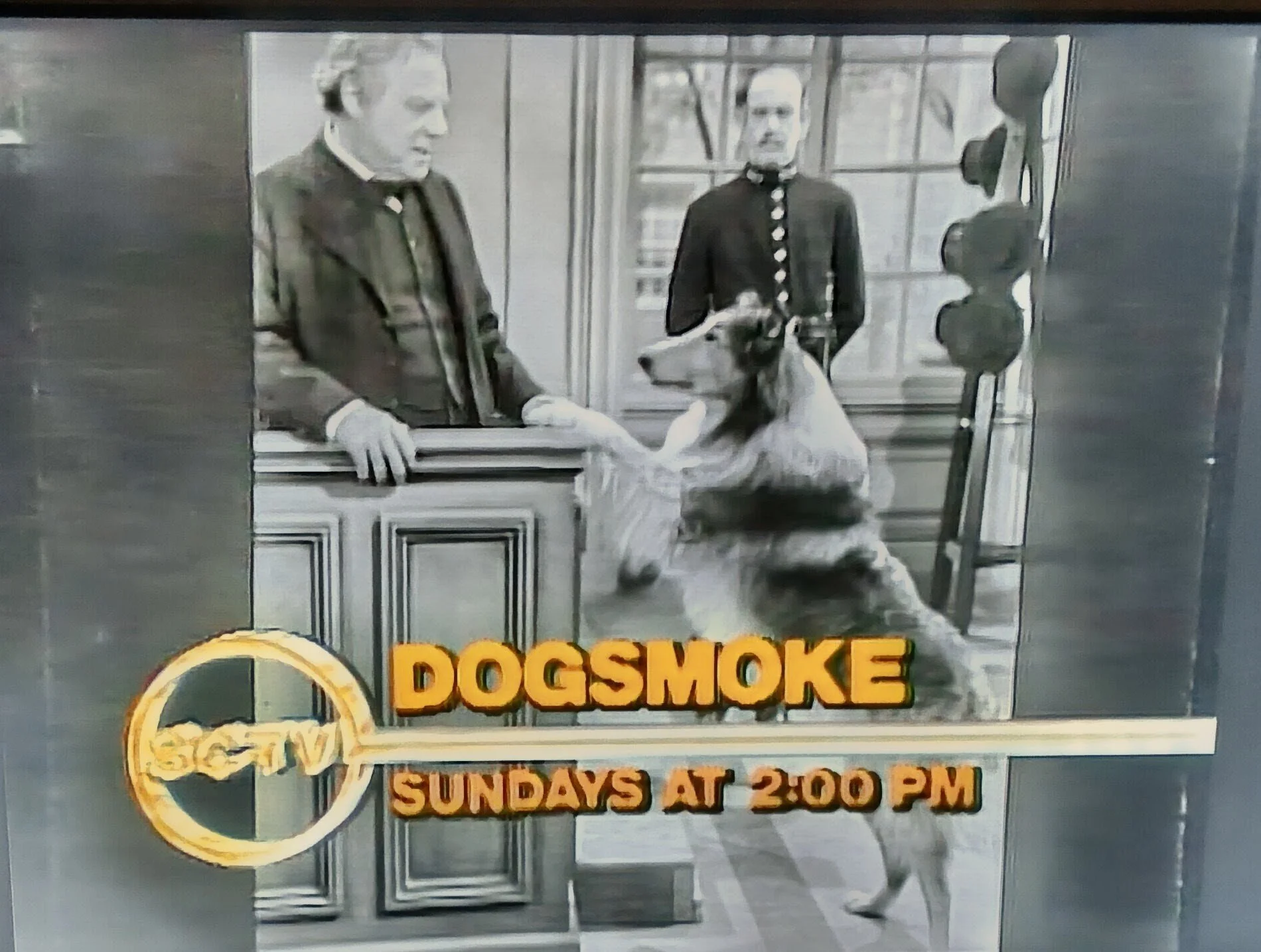
MILK MONEY is an older story than it pretends to be. The dance hall girl who goes straight and earns her way back to respectability through the right man and the right circumstances is one of the oldest redemption narratives in American popular culture. GUNSMOKE ran it for twenty years. MILK MONEY runs it for a hundred and ten minutes, swaps the frontier for a suburb that never existed, and calls it a family comedy.

It more or less works, and that's a stranger achievement than it sounds. The boys are funny, Harris is remarkable, Griffith earns more than the material deserves, and the title traces a quiet arc from three kids pooling their lunch money to a woman scooping ice cream in Middleton — whether that's thematic coherence or a happy accident, with MILK MONEY you're never entirely sure.

Final Verdict: 60 out of 100

Sidenote: For the record, Tom does not get herpes.


Local Hero (Retro)

by Edward Dunn


LOCAL HERO (1983) PG 111 minutes Director: Bill Forsyth Writer: Bill Forsyth Peter Riegert, Burt Lancaster, Denis Lawson CAST Peter Riegert...Mac MacIntyre Burt Lancaster...Felix Happer Denis Lawson...Gordon Urquhart Fulton Mackay...Ben Knox Peter Capaldi...Oldsen
When I feel
that the world is too much for me
I think of the Big Sky
and nothing matters much to me.

— “Big Sky,” Ray Davies / The Kinks (1968)

I found LOCAL HERO the way Mac MacIntyre found Ferness — by accident, through a chain of events I couldn't have planned. I was listening to a Northern Exposure podcast when a producer named Cheryl Block mentioned in passing that Josh Brand had watched this film while developing the show and couldn't stop talking about it. On a whim I pulled it up. I had no prior attachment to it, no childhood memory, no critical framework telling me how to feel. I didn't even know who was in it. What I knew was that a 1983 Scottish film about an oil company trying to buy a village had somehow inspired one of my favorite television shows, and that seemed like enough of a reason. Two hours later I wasn't entirely sure what had happened to me.

I kept trying to find something to compare it to. The better Albert Brooks films came to mind — where a man whose structured, success-driven life quietly dissolves around him without anyone raising their voice. Northern Exposure is the obvious reference point, for reasons that turn out to be less accidental than they appear. You can feel the inheritance everywhere: in the eccentric community that never condescends to its own quirks, in the conversations that drift into philosophy without announcing it, in the humor that arrives sideways and leaves before you've fully registered it. The closest I came was an unlikely one — watching JURASSIC PARK for the first time. Not because the films have anything in common, but because of that specific feeling of discovering a place you don't want to leave. All of these comparisons are slightly wrong. LOCAL HERO slips out from under all of them. It is, stubbornly and completely, its own thing.

It almost wasn't this movie at all. Warner Brothers and Goldcrest, uncomfortable with the little-known Peter Riegert in the lead, pushed hard for Henry Winkler. The Fonz. There is a version of this review where I spend several paragraphs trying to unsee Arthur Fonzarelli feeding ten pence coins into a Scottish phone box, watching the aurora borealis, maybe even racing that motorcycle guy outside the hotel. Forsyth had written the role with Riegert in mind and had no interest in anyone else. What I can tell you is that Riegert's particular quality — understated, slightly opaque, a man whose face doesn't arrive with prior associations already attached — is load bearing. Forsyth held firm. When Riegert apparently told him he'd understand if the politics of Hollywood forced a different choice, Forsyth's response was simple: if you're not in it there's no movie.

The setup is deceptively simple. Mac MacIntyre, a junior executive at Knox Oil and Gas in Houston, is sent to Scotland to buy a small fishing village and its bay for a new refinery. He's chosen for the assignment because of his Scottish surname, a detail that turns out to be something of a fiction — his family changed their Hungarian surname to MacIntyre when they arrived in America because they thought it sounded more American. He is sent to negotiate with his own people and has no people. When he arrives in the fictional village of Ferness he finds a community that is warm, eccentric, and almost comically eager to sell. The expected conflict — scrappy locals defending their way of life against corporate destruction — never materializes because nobody is playing their assigned role. The villagers want the money. Mac finds himself falling in love with the place he's supposed to be buying. The oil company's eccentric billionaire owner is more interested in finding a comet than running an oil company. The film keeps setting up a confrontation and then quietly declines to have it.

Ferness is a village where everyone has at least three jobs and nobody thinks this is unusual. Gordon Urquhart runs the hotel, tends bar, drives a taxi, fixes lobster creels on the beach, and happens to hold power of attorney for the entire community in negotiations with a multinational oil company. The reverend is African — he came as a student minister decades ago and never left, which strikes nobody as remarkable. A Soviet fisherman named Victor shows up for the ceilidh and immediately starts discussing currency markets and short-term deposits with Gordon, because of course he does. Early on, Mac and Danny stand on the pristine beach they've been sent to buy and marvel at everything petroleum makes possible — nylon, polythene, dry cleaning fluid, waterproofs. The jets overhead really spoil a very nice area, Mac observes, apparently without irony. The whole village piles into the church to scheme about how to extract maximum money from the oil company, which is either the most Scottish or most human thing in the film, possibly both. And somewhere in the background, a man on a motorcycle nearly runs people down every time they walk out of the hotel, unexplained, unremarked upon, permanent.

LOCAL HERO was made in 1983, before the internet, before smartphones, before the average person spent their waking hours staring at a screen in a city that had forgotten what the night sky looked like. And yet it feels urgently contemporary in a way that has nothing to do with nostalgia. The film is quietly obsessed with scale — specifically with what happens to a person when something reminds them of their actual size in the universe. Happer, one of the most powerful men in the world, pays a therapist to abuse him and dreams of having a comet named after him. Mac arrives from Houston, where, as Forsyth noted, you can't readily look up and see the stars. Ferness has no such problem. The sky over Scotland keeps interrupting the business of buying and selling — a meteor shower stops Mac cold, the aurora borealis stops an entire community mid-thought, and when Happer finally arrives by helicopter the lights are so extraordinary that his entrance feels less like a business trip than a landing from another world. Ben Knox already understands all of this. He lives on a beach, owns no possessions worth mentioning, knows the night sky like his own backyard, and cannot be bought for any amount of money. The film's argument, delivered without a single speech, is that Ben has the scale of things exactly right — and that understanding your place in the universe doesn't make you small. It makes you free.

Ben Knox is the soul of the film and the hardest character in it to explain. He lives alone in a shack on a beach he has owned for four hundred years, a gift from the Lord of the Isles to an ancestor who helped out with a spot of trouble — killed his brother, something like that. He has eight unplotted objects in the night sky nobody else has bothered to catalog. Coconuts and oranges wash up by the North Atlantic Drift; he accepts them as perfectly normal. Ben cannot be bought. Not for a hundred thousand pounds, not for half a million, not for any beach in Hawaii or Australia. When Mac spreads postcards of tropical beaches in front of him, Ben looks at them politely and notes that they seem like very nice beaches, but he only needs the one. He already has this one. The company is even named after him, in a roundabout way — Knox Oil and Gas, Ben Knox, a coincidence Forsyth plants without explanation or emphasis, the way he plants everything. When Happer finally arrives and the two of them disappear into the shack together, the film stays outside with everyone else. Forsyth said he simply didn't know what they would say to each other. The audience fills it in themselves. Whatever it was, Happer comes out having decided to build an observatory instead of a refinery. Ben stays on his beach. The film considers this a happy ending. It's right.

There is a version of LOCAL HERO that is a slightly better film than the one that exists. It lives in the first act. Mac's Houston life — the migraines, the Porsche, the electrically locked briefcase, the ex-girlfriend who took his camera case, the office where everyone cheerfully discusses buying a country over lunch — needed more room to breathe. The counterweight to Scotland had to be heavy enough that when Scotland dissolves it, the audience feels the full weight of what's happening. As it stands the Houston section moves quickly in a way that slightly softens Mac's transformation. You feel him changing, but you don't fully feel what he was changing from. This is not a guess. David Puttnam identified it himself before the film even opened, calling the first act cuts the film's flaw — the price paid for getting the runtime to a manageable length. When Mac calls Houston two days into his trip and says it feels like he's been in Ferness forever, the line should hit like a small earthquake. It does hit. It just hits a little softer than it might have. Those are the eight points I'm withholding. Not for what's there. For what got cut.

Warner Brothers wanted a different ending. Mac returns to the village, gets embraced by his mates, marries a local girl. The full upbeat Hollywood resolution. Forsyth refused. His original ending was Mac back in his Houston apartment listening to the sounds of the city — no sentiment, no hope, just the noise closing back in. Puttnam negotiated a compromise. Forsyth remembered he had a shot of the village with the phone box in the mid-ground. They added the sound of it ringing. Warner Brothers found it acceptable. That became the ending. The instinct to side with the artist against the studio is almost always correct and the history of Hollywood is full of good reasons for it. This is the rare exception. The compromise produced something neither party was aiming for — genuinely open, genuinely moving, and completely consistent with a film that refused to tell you what to think from the first frame to the last. Mac is back in Houston. The phone is ringing. Whether anyone answers it is entirely up to you. Puttnam said it best — if they had done everything Warner Brothers wanted nobody would be talking about this film today. They compromised on the ending and held firm on everything else. That turns out to be exactly the right set of compromises to make. Most studios get it precisely backwards.

Everything about LOCAL HERO should tip into sentimentality. A man finds a beautiful place and doesn't want to leave. An old eccentric saves a beach from corporate destruction. A lonely billionaire finds connection with a stranger over a shared love of the stars. A community's way of life is preserved. Mark Knopfler playing gentle guitar over Scottish landscapes. Any one of those elements in a lesser film would have you reaching for a bucket. Forsyth avoids it through a combination of techniques that work so naturally you don't notice them operating. The humor cuts through at exactly the right moments. Nobody explains their feelings. The film refuses to linger on its most emotional moments — it lets them happen and moves on before you can be manipulated by them. The rabbit is funny and then it's dinner. The aurora borealis is beautiful and then Mac needs more ten pence pieces. Happer and Ben bond in a shack and the camera stays outside. What remains is something difficult to describe. Not happiness exactly. Not melancholy. Something closer to the feeling the Kinks were reaching for in Big Sky — when the world gets to be too much, think of the big sky, and nothing matters quite so much anymore. I watched this film with no preparation, no nostalgia, no prior attachment, and it still did that to me. That's the only honest thing I can tell you about it.

Final Verdict: 92 out of 100

Sidenote: Just like 3 NINJAS, LOCAL HERO is also freely available on YouTube.


3 Ninjas (Retro)

by Edward Dunn


3 NINJAS (1992) PG 84 minutes Director: Jon Turteltaub Writers: Kenny Kim, Edward Emanuel Victor Wong, Michael Treanor, Max Elliott Slade CAST Victor Wong...Grandpa Mori Tanaka Michael Treanor...Rocky Max Elliott Slade...Colt Chad Power...Tum-Tum Rand Kingsley...Hugo Snyder Alan McRae...FBI Agent Brown Professor Toru Tanaka...Mr. Sakata Joel Swetow...Eddie Patrick Labyorteaux...Fester Kate Sargeant...Emily

There are two versions of 3 NINJAS. Most Americans don't know this. The version that played in U.S. theaters in the summer of 1992 is not the same film that screened across Europe. The European cut runs several minutes longer, closes a subplot the American version leaves dangling, and is modestly — though meaningfully — the superior film. This distinction would have meant nothing to me in the fall of 1992, when I was eight years old and sitting in the Alderwood Village Cinema 12, a $3 second-run house in Lynnwood, Washington, watching the lesser version without knowing another one existed. I wouldn't find out for thirty years.

3 NINJAS exists at the intersection of HOME ALONE and TEENAGE MUTANT NINJA TURTLES, two properties that had recently demonstrated that children consuming large amounts of sugar would pay to watch other children cause chaos and mayhem. The film follows three brothers — Rocky, Colt, and Tum-Tum — who spend their summers training in ninjutsu under their Japanese grandfather, Mori Tanaka. Their father is an FBI agent pursuing an arms dealer named Hugo Snyder, who happens to be Grandpa's former partner. Snyder, believing that leverage is the sincerest form of negotiation, hires a trio of burnout criminals to kidnap the boys.

Victor Wong, best known as Egg Shen in BIG TROUBLE IN LITTLE CHINA, anchors the film in a way it doesn't entirely deserve. If the production was aiming for a Mr. Miyagi figure, they largely achieved it, though Wong is working considerably harder than the material requires. His presence gives the movie a credibility it has no other claim to.

The children do not look remotely Asian. Their mother mentions her Asian side at one point, but she presents as entirely white. This is not a KUNG FU-David Carradine situation where the casting could even pass as half-convincing. The grandfather is Japanese. The grandchildren very clearly are not.

The villain, Hugo Snyder, is played with full cartoonish commitment by Rand Kingsley — think Terry Silver from KARATE KID III, a man who has confused menace with theatrics. His henchman Mr. Sakata, played by Professor Toru Tanaka, is a stocky, intimidating presence who finally gives the boys a credible physical challenge in the third act. Sakata is, briefly, the most interesting antagonist in the film.

The score deserves mention as a cautionary example. It sounds like some guy fucking around on a Casio keyboard, a vague approximation of what Danny Elfman does. There is a great deal of whimsy. None of it lands.

Most of the genuine comic inspiration involves Fester and his two associates, a trio of burnout criminals hired to kidnap the boys. When they're ordered to grab the children, one of them asks, with genuine professional concern, "Could these be like any kids, or did you have some specific ones in mind?" They are menacing one moment and catastrophically stupid the next, and the film is wise enough to lean into this contradiction. "This kidnapping is so much better than armed robbery," one of them observes over stolen pizza, and he is not wrong. Their van has a Die Yuppie Scum sticker on it, which tells you nearly everything you need to know about these men and their life choices. Their plans are hilariously half-baked, just like their brains. When the boys deploy homemade weapons against them — throwing CDs like ninja stars, lobbing pepper bombs, administering what is described as "instant diarrhea" via laxative — the chaos is energetic and occasionally funny. When one of them takes a CD to the face, his anguished "Ooh! Watch my nose, dude! It's bad news already." is delivered with the commitment of a man who has genuinely earned his suffering. Ex-Lax does not cause instant diarrhea. Nobody cares.

The movie also gestures toward kidnapping Emily, the girl next door and Rocky's unofficial love interest, before abandoning the idea entirely. The setup is there. The payoff is not. This is a pattern throughout: ideas are introduced for tension or laughs, then abandoned when the script loses interest. Similarly, I don't believe for a moment that any of the boys would genuinely lose faith in their grandfather. The film requires them to, briefly, and they do, because the script says so.

Most American action films ask the audience to accept certain physical impossibilities — a hundred-pound woman defeating a man twice her size, for example. In this film, three boys systematically dismantle a houseful of grown men. It is the same logic applied to smaller protagonists. In a kids' movie this is arguably forgivable. It is still funny to notice.

I can confirm from personal experience that the film works on its intended audience. In the fall of 1992, my friend Jason, who lived nearby and was, if such a thing is possible, even nerdier than me, had an eighth birthday party. His parents drove two carloads of children to the Alderwood Village Cinema 12, and we watched 3 NINJAS with smuggled popcorn from sack lunch bags. Afterward, we walked across the parking lot to Chuck E. Cheese, play-fighting the whole way there. The movie had done its job. And yet, even then, something didn't sit right with me. I couldn't have articulated it at eight years old, but the feeling was there. The film was fine. It wasn't quite enough.

It would take thirty years to understand why.

The version I saw that day was the American cut. In the European version, the basketball scene plays differently. The boys do not win. The stakes are not Emily's bike — the bullies simply threaten to rearrange their faces, and when the game ends they ride off with the bikes anyway. This is more convincing. The American version has Rocky executing a six-foot slam dunk to win back the bike, which is the kind of moment that feels thrilling at eight and faintly exhausting at forty. More significantly, the European version adds an entirely new sequence after the Snyder plot resolves — the boys walking home, bickering over borrowed bikes, Rocky returning to confront the bullies and recover what was taken. It closes a loop the American version leaves open. The film feels finished.

None of this makes 3 NINJAS a good movie. The European cut is a modest improvement on a film that was adequate to begin with. The American version is good enough for an eight-year-old. I can personally attest to that, though "good enough" is doing real work in that sentence. That's the version getting scored here.

Clearly, what I should have done is decline that birthday invitation. No, Jason, I will not attend a fun birthday party full of neat friends to watch a vastly inferior version of 3 NINJAS. Instead I will convince my parents to drive to a seedy electronics shop in downtown Seattle and purchase a multi-system VCR. And I shall import the uncut VHS tape from Germany. Anything less is pure blasphemy.

Final Verdict: 50 out of 100 (55 if you can find the right bootleg)

Sidenote: Both versions are currently freely available on YouTube...for now.


Bushwhacked (Retro)

by Edward Dunn


BUSHWHACKED (1995) PG-13 90 minutes Director: Greg Beeman Writers: John Jordan, Danny Byers, Tommy Swerdlow, Michael Goldberg Daniel Stern, Jon Polito, Brad Sullivan CAST Daniel Stern...Max Grabelski Jon Polito...Agent Palmer Brad Sullivan...Jack Erickson Ann Dowd...Mrs. Patterson Anthony Heald...Reinhart Bragdon Tom Wood...Agent McMurrey Blake Bashoff...Gordy Michael Galeota...Dana Art Evans...Marty
“Scout's Honor — the Hostage Crisis. Day one.”
EyeWitness America

I almost saw BUSHWHACKED on my eleventh birthday. It was August 1995, and the decision came down to two movies. I invited a couple of friends, and after a week of phone tag we settled on BABE instead. My mom drove us to the Everett 9 Cinemas on Everett Mall Way. Thirty years later I had to buy a DVD drive to watch the one we didn't pick.

BUSHWHACKED began life as a HOME ALONE spinoff, with Stern reprising Marv in his own movie. By the time it reached theaters the character had been renamed Max Grabelski, but not much else had changed. The leather jacket was different. The routine was the same.

It is worth pausing on where Stern was at this point. He had spent the early part of his career doing genuinely interesting work — BREAKING AWAY, DINER, THE WONDER YEARS narration — the kind of roles that suggested an actor with real range and a particular gift for quiet, lived-in characters. Then HOME ALONE happened. Marv made him famous in a way his better work never had, and the years that followed were largely an attempt to stay in that lane. BUSHWHACKED is somewhere near the end of that attempt. By 1995 the lane was narrowing and the material was getting thinner, and you can feel it in every scene.

The setup has genuine potential. Max Grabelski is a courier who has been making regular late-night deliveries to a millionaire named Reinhart Bragdon, pocketing fifty-dollar tips and not asking questions. When he shows up one night to find the mansion on fire and a gun in his face, he grabs the weapon and runs. Bragdon turns up dead. Max is the obvious suspect. What the film doesn't bother to develop is the more interesting story underneath — that Max had been cultivated as a fall guy over multiple visits, set up by someone he thought he had a friendly arrangement with. That's almost noir territory. BUSHWHACKED doesn't notice.

Instead it pivots. On the run and out of options, Max finds himself mistaken for the scout leader of a ranger troop and ends up chaperoning a group of kids into the wilderness. The film decides this is the movie it wants to be, and everything that came before it is quietly abandoned.

Daniel Stern is a strange fit for this part. He has always been better bouncing off somebody else than carrying a whole movie on his back. That was true in BREAKING AWAY, true in DINER, and even true in HOME ALONE, where Joe Pesci gave Marv something to play against. Here he is out there on his own, flailing, and after a while the flailing starts to feel less funny and more desperate.

The character doesn't help. Max is supposed to read as a lovable screwup, but Stern plays him as sneaky and sniveling in a way that never quite invites you in. There is a difference between a character who makes bad decisions and a character you don't want to spend time with. BUSHWHACKED doesn't seem aware of the distinction. Even physically, he never convinces as a delivery driver — he looks less like someone who has spent years jumping in and out of a truck and more like Jeff Goldblum waiting to explain chaos theory. The job is just a costume, like everything else in the movie.

Stern himself briefly returned to the headlines earlier this year after being cited for soliciting a prostitute. The charge was dismissed after he completed an education program, which is more closure than BUSHWHACKED ever manages.

The supporting cast is better than the movie around them. Jon Polito and Anthony Heald both seem to be acting in a slightly different film — one that takes the crime angle more seriously than BUSHWHACKED does. Polito brings his usual blustery authority, while Heald, who played the slimy Dr. Chilton in SILENCE OF THE LAMBS, is slippery enough to make Reinhart Bragdon feel like a real villain instead of just a plot device. Even the smaller roles help. Art Evans shows up briefly as Max's boss and instantly makes the delivery company feel more believable than the script ever does. And Brad Sullivan, as the real scout leader, has that rigid, humorless authority figure energy that used to show up in a lot of 90s kids movies. For brief stretches, they make you wonder if a better movie was hiding in here somewhere.

There are moments where the comedy actually lands — a smoke signal sequence where the distress call comes out as “Belp Belp,” and a campfire scene where the kids calmly diagnose every red flag Max ignored. But they are islands. The film can't build anything around them.

BUSHWHACKED lists four writers, and the movie feels like it. The first act sets up a mildly interesting crime farce involving mob money and a faked death. Then Max ends up with the scout troop and the film abruptly resets into a children's wilderness adventure. The result feels less like one story than two different ideas stapled together and hoping nobody notices.

Watching it now, what struck me most was how little the film's version of scouting resembled anything I actually experienced. I was the same age as these kids when BUSHWHACKED came out in August of 1995. I had just finished Cub Scouts and decided I was not quite dorky enough to continue to Boy Scouts. Trips like this were never a handful of kids wandering around the mountains with one adult. They were organized camps, designated sites, and a small army of parents hovering nearby. If my own dad was working nights or weekends, I would end up going with another kid and his father and sharing a tent. That was the reality. BUSHWHACKED turns it into something closer to a children's adventure novel, where a complete stranger can show up in a leather jacket and loafers, claim to be the scout leader, and no parent notices anything is wrong.

Once you notice that gap between reality and the movie's version of it, the rest of BUSHWHACKED starts to unravel pretty quickly. The cartoon logic extends well beyond the scouting. The parents never notice the absence of camping gear. The real scout leader gets his head glued to a steering wheel and the cops, assuming he's their suspect, rip it loose and move on. Later, when the rope bridge is cut, the correct response would be helicopters and a full search and rescue operation within the hour. BUSHWHACKED treats it as a mild inconvenience.

The money plot doesn't hold up much better. The film gestures at worn currency scheduled for destruction as the basis for the scheme, which is almost a clever idea, but the mechanics of how a private courier ends up delivering mob money never get explained in any satisfying way. Pull on any thread and the whole thing unravels. The movie even seems dimly aware of the problem. In one campfire scene Max lays out his situation as a hypothetical, and the kids immediately identify every red flag he ignored. “Only a sucker would fall for that,” one of them says. The film accidentally wrote its own critique.

BUSHWHACKED wants you to feel good about Max by the end. He saves a kid, earns his scout badge, and everyone forgives everything. It is a tidier resolution than CELTIC PRIDE managed, and at least the film gives Max a concrete moment of courage to hang the redemption on. But the more you think about it, the more the whole arc collapses.

The kids would have been fine without him. Better than fine. If Max had never stolen the scout leader's Hummer and taken his place, they would have had a normal overnight trip with an experienced scout leader, come home the next morning, and none of what follows would have happened. The bears, the rope bridge, the criminals with guns — Max didn't save these children from danger. He created it. The film asks you to applaud him for resolving a crisis that was entirely his fault.

My friends and I made the right call that August. BABE was the better movie by any measure, and thirty years later it still holds up in a way BUSHWHACKED doesn't. But there is something quietly satisfying about finally watching the one we didn't pick, even if the experience mostly confirms what eleven-year-old me suspected from the trailer — that it was going to be a lot of Daniel Stern falling down and not much else.

Final Verdict: 44 out of 100


Celtic Pride (Retro)

by Edward Dunn


CELTIC PRIDE (1996) PG-13 91 minutes Director: Tom DeCerchio Writer: Judd Apatow, Colin Quinn Damon Wayans, Daniel Stern, Dan Aykroyd CAST Damon Wayans...Lewis Scott Daniel Stern...Mike O'Hara Dan Aykroyd...Jimmy Flaherty Marcia Strassman...Carol O'Hara Christopher McDonald...Coach Kimball Vladimir Cuk...Lurch Bill Walton...Himself Larry Bird...Himself

I saw CELTIC PRIDE in a theater in 1996. I was a kid, and I still liked most movies at that point. Even then, something felt off. I couldn't have told you what it was. I just knew that I was supposed to be rooting for these two guys and I wasn't.

It took me thirty years and two viewings to figure out why.

By 1996, the Celtics were no longer a team anyone celebrated. The Bird era was over. The Boston Garden had already closed and was waiting to be torn down. The team was bad — genuinely, embarrassingly bad — stuck in the kind of rebuilding purgatory that has no romantic name. This was after Larry Bird, and well before Paul Pierce. If you were a Celtics fan in 1996, you were a person in mourning who hadn't fully accepted it yet.

I came to the Celtics later, and sideways. Seattle still technically had a team when Ray Allen got traded to Boston, but nobody was paying attention anymore. You don't abandon a franchise. Sometimes a franchise abandons you first.

The setup is simple enough. Two Boston superfans kidnap Utah Jazz star Lewis Scott the night before game seven of the NBA Finals, hoping to keep him out of the game long enough for the Celtics to win a championship. They didn't exactly plan it — they blacked out, and Scott was just there when they came to. But they make the conscious decision to keep him, which is where the moral accounting should begin. It never really does.

CELTIC PRIDE wants you to find this charming. Two lovable obsessives doing a desperate thing for the team they love. The problem is that Lewis Scott didn't do anything to them. He's just very good at basketball. Mike and Jimmy are committing a felony against a man whose only offense was being employed by the wrong franchise.

A movie built on this premise has two options. It can commit to the comedy and make everything weightless enough that the audience never stops to think about it. Or it can acknowledge the darkness and do something honest with it. CELTIC PRIDE tries to split the difference and ends up with neither.

This is a movie that has opted out of consequence entirely. A police officer shows up while Scott is being held at gunpoint and just walks away. Later, Mike's wife learns about the kidnapping and doesn't call the police. By the end, Scott himself covers for them. And in case that wasn't enough, they receive a hundred thousand dollars for their trouble. It isn't just saying the kidnapping was fine. It's saying everyone benefited from it.

The closest comparison I can think of is BIG FAN, a 2009 film that takes a similar premise — obsessive fan, athlete, a line that gets crossed — and never blinks. That film understands that this kind of story only works if you're willing to look directly at what fanaticism actually costs. CELTIC PRIDE keeps looking away.

Daniel Stern is the most capable actor in the cast and the most wasted. Anyone who has seen him in DINER or BREAKING AWAY knows what he can do with a character who is quietly falling apart. There are traces of that here — the divorce, the failed athletic dreams that Carol's therapist has already diagnosed — but it never follows through on any of it. Instead it asks him to ride the goodwill of his HOME ALONE persona until the wheels fall off. Mike O'Hara had the potential to be genuinely tragic. He ends up being Marv with a Celtics jersey.

Dan Aykroyd is a different problem. His best work has always leaned into his strangeness — BLUES BROTHERS, GHOSTBUSTERS, even CONEHEADS finds the right vehicle for his particular energy. Jimmy Flaherty needed someone whose obsession reads as unhinged and human simultaneously. Aykroyd comes across as unhinged and alien. The Boston accent doesn't help. It hits the broad markers but never finds the rhythm, and by the third scene the accent begins to overwhelm the character.

Christopher McDonald is playing a familiar variation of himself. In this case, that's exactly what the movie requires — a coach radiating Tom Thibodeau levels of sideline stress.

Damon Wayans, to his credit, is competent. That sounds like faint praise and it is, but competent is the ceiling in a film this untethered. He's playing the only character with any grounding in actual consequence, and he doesn't oversell it. The press conference apology is a good example — his character explains his back problems come from carrying a sorry excuse for a team all season. It lands somewhere between groan and laugh, which is probably the best CELTIC PRIDE ever manages.

There is something performative about the fandom here that never goes away. Mike and Jimmy feel less like obsessives and more like two men doing an impression of what fanaticism looks like. The jerseys, the memorabilia, the superstitions — it all reads as a costume rather than a life. A real fanatic has a specificity to their devotion that is almost impossible to fake. These two could take the jerseys off and go home.

CELTIC PRIDE is rated PG-13, which means the real texture of Boston sports fandom in that era is completely off the table. Anyone who has spent time around that particular strain of New England loyalty knows it has edges it was never going to touch. What you're left with is a sanitized version — fandom as the studio imagined it.

The best thing in CELTIC PRIDE is a peripheral character named Ilyalurtz Bronfermakher, listed in the credits simply as Lurch. He is a seven foot Eastern European player on the Jazz roster who gets approximately four minutes of screen time and is more fully realized than anyone the script is focused on. Vladimir Cuk, who plays him, was a real basketball player before he was an actor, and the cadence he brings to the role is not something you could coach. When Lurch tells his coach he has got the bad crap, and then misses a sure slam dunk, it is the funniest moment in the movie. When he is finally called off the bench late in the game and informs the coach he will be giving them some of that death row shit, you almost wish the movie was about him instead.

The most unexamined relationship in the movie is Mike's wife Carol. Carol is established early as the voice of reason — she has been holding divorce papers for years, her therapist has diagnosed the obsession, she has clearly had enough. Then the kidnapping happens and she just stops being a person. She doesn't report it. She roots for the Jazz to protect her husband from consequences. And presumably stays married to him at the end. CELTIC PRIDE spends the first act building her as someone who finally sees clearly, then quietly asks her to forget all of it. She never gets an explanation and neither does the audience.

CELTIC PRIDE closes with two scenes that tell you everything. After the Celtics win, a police officer asks Lewis Scott if these two men have perpetrated a crime against him. Scott looks at Mike and Jimmy and says "I know these two jerks, they're my friends." No consequences, no accountability, no acknowledgment that anything wrong occurred. The victim absolves his kidnappers because the movie needs a tidy ending and couldn't think of a better way to get there.

And then, seven months later, Mike and Jimmy are outside Deion Sanders' house. In a better movie this might have worked as a jokey button that sends the audience out laughing. Here it just confirms what you already suspected. CELTIC PRIDE doesn't just let them off the hook. It endorses them, suggests that kidnapping athletes is simply what devoted fans do, and that getting away with it once is a reasonable argument for doing it again. CELTIC PRIDE mistakes the absence of consequence for charm. They are not the same thing.

I knew something was wrong with this movie when I was a kid. Thirty years later I can finally explain it. CELTIC PRIDE is a movie about getting away with it. Unfortunately that applies to the filmmakers too.

Final Verdict: 33 out of 100


Air Bud (Retro)

by Edward Dunn


AIR BUD (1997) PG 98 Minutes Director: Charles Martin Smith Writers: Paul Tamasy, Aaron Mendelsohn Kevin Zegers, Michael Jeter, Bill Cobbs CAST Kevin Zegers...Josh Framm Michael Jeter...Norm Snively Bill Cobbs...Arthur Chaney Wendy Makkena...Jackie Framm Eric Christmas...Judge Cranfield Brendan Fletcher...Larry Willingham Norman Browning...Coach Barker Nicola Cavendish...Announcer Stephen E. Miller...Principal Pepper Shayn Solberg...Fog Frank C. Turner...Referee

There are two kinds of people in this world — those who like golden retrievers, and...just kidding, there's only one kind of people.

I should also tell you upfront that before writing this review, I read a 348-page book about the real dog, Buddy. To be fair, at least a third of it is about the author.

I'll admit I tried watching AIR BUD once before and checked out after twenty minutes. The IMDb rating of 5.4 didn't exactly inspire confidence, and I went in looking for immediate absurdity rather than what the movie actually is — a family sports film that isn't in any hurry to earn its premise. That was my mistake, not the movie's.

GO, BUDDY! — the book written by Kevin DiCicco, the man who found and trained Buddy — changed my approach entirely. The real story isn't what you'd expect. He was a scraggly, pinecone-obsessed stray that DiCicco stumbled across in the Sierra Nevada, nursed back to health, and then discovered almost by accident had a peculiar gift for basketball.

The talent snowballed organically — AMERICA'S FUNNIEST HOME VIDEOS, then David Letterman's Stupid Pet Tricks, then Disney. Hollywood didn't manufacture Buddy. It just scaled up something that already existed.

Knowing that going in makes the movie feel less like cynical product and more like a document of something that actually happened to a real animal. That's a better starting point for a review.

AIR BUD opens with a kid who has lost his father and a dog who has lost his dignity. Josh Framm is twelve, quiet, and new to Fernfield, Washington — though you'd pick up on the Pacific Northwest setting less from anything the movie tells you and more from the casual Shawn Kemp references. The grief isn't milked. The movie establishes it, respects it, and then lets the dog do the therapeutic heavy lifting.

What's refreshing about AIR BUD is how unapologetically sincere it is about all of this. It knows exactly what it is — a movie about a golden retriever who plays basketball — and it never once tries to be anything else. There's no winking at the camera, no meta-commentary, no attempt to justify its own premise. It simply commits, which turns out to be harder to pull off than it looks.

The villain of the piece is Norm Snively, an alcoholic clown who loses Buddy during a disastrous birthday party performance in the opening scene. Michael Jeter plays him with a particular brand of desperation that edges closer to the seedy birthday clown from UNCLE BUCK than broad slapstick. He's not scary exactly, but he's genuinely unsettling in the way that only a failing clown can be. The movie wisely never tries to rehabilitate him. He crashes his truck into a lake while drunk, shows up uninvited to a championship basketball game, and eventually gets his case dismissed by a judge who can barely conceal his contempt. It's a fitting end for a man who opened the film by nearly choking on a plate-spinning stick.

The abusive coach who throws basketballs at children gets fired early enough that the movie doesn't have to spend much time justifying it. In his place comes Arthur Chaney, played by Bill Cobbs, a retired pro who has quietly ended up as the school handyman. The movie doesn't explain how he got there, and it doesn't need to. Cobbs brings enough quiet authority to the role that you fill in the blanks yourself. There's a dignity to the character that the film earns without spelling anything out — a private man with a complicated past who decides to invest in a lonely kid and a dog. He brings genuine warmth to what could have easily been a throwaway mentor role, and he elevates every scene he's in, including a courtroom moment late in the film that works almost entirely because of him.

One of the film's more underrated choices is what it doesn't do. There are maybe three songs in the entire movie, including a track you'd hear at any basketball game, and even the film score barely makes its presence known. For a mid-90s family film, that's almost radical restraint. AIR BUD trusts the story and the performances to do the work. Deliberate or not, it was the right call.

AIR BUD also gets the ratio right. There is enough dog without it ever overwhelming the human story, and enough human story without the dog feeling like an afterthought. That balance is harder to achieve than it sounds — either the animal becomes a gimmick or the humans overwhelm it. Here the two storylines breathe together. Josh's grief arc has room to develop alongside Buddy's presence rather than being swallowed by it. The chemistry between Kevin Zegers and Buddy feels genuine, and a lot of it is. Much of the film is simply the two of them playing together, loosely edited but emotionally real.

If the film has a structural weakness it's that the basketball stakes never quite build the way they should. The championship game arrives almost without warning — announced in a single throwaway line from a commentator — and the movie hasn't done enough work to make you feel the journey to get there. Ironically, the original concept had Buddy helping a struggling team reach the finals through a proper playoff arc. That version of the film would have given the basketball more weight. What we get instead is competent but a little thin. Though there's a case to be made that this was partly intentional — the abusive coach who opened the film was obsessed with winning, and replacing him with Chaney meant shifting the value system away from trophies and toward something less measurable. A full championship run might have sent the message right back in the wrong direction.

Here's where the review takes a turn.

The dog who played Buddy was actually named Buddy. Kevin DiCicco found him as a scraggly stray in the Sierra Nevada in 1989, nursed him back to health, and gradually discovered that this particular dog had an inexplicable affinity for basketball. The trick was less graceful than it looks — a slightly deflated ball covered in olive oil, propelled off Buddy's nose and into the basket — but it was completely real. No CGI, no camera tricks. Roger Ebert apparently assumed it was digital effects, which says less about the movie and more about how low his expectations were going in.

Buddy made his name on AMERICA'S FUNNIEST HOME VIDEOS and David Letterman's Stupid Pet Tricks before Disney came calling. He also made a one-episode cameo as Comet on FULL HOUSE — specifically for a basketball scene with Kareem Abdul-Jabbar, which makes perfect sense.

Buddy was already older than he looked during filming. DiCicco had found him as a stray and never knew his exact age. The production touched up the white on his muzzle for certain shots. By the time the movie came out in the summer of 1997, Buddy had been diagnosed with bone cancer. He had his right hind leg amputated that fall and began chemotherapy. Disney quietly distanced themselves, concerned that a three-legged dog undergoing cancer treatment might upset the children they were marketing the film to. You can't entirely blame them for the logic even if the coldness of it stings.

Buddy died in February 1998, in his sleep. He was ten minutes away from meeting his own puppies.

Kevin DiCicco did genuine good with Buddy's fame. Hospital visits, charity appearances, bringing joy to kids who needed it. That counts for something. But the real story around Buddy is messier than the movie it inspired. There were legal disputes, questions of ownership, a franchise that grew well beyond anyone's original intentions — one DiCicco never really benefited from. As recently as 2024 he was facing homelessness. The man who found a stray dog in the woods and turned him into a cultural phenomenon doesn't own the rights to that phenomenon.

None of this tarnishes Buddy. That's the thing about dogs — they stay pure even when the humans around them get complicated. The contracts, the disputes, the sequels don't touch him. What survives is the image of a golden retriever bumping a basketball into a hoop like it's the most natural thing in the world, and the collective memory of every kid who saw it and believed.

At some point Buddy stopped belonging to one person and started belonging to culture. That's how myth works. The human discovers, the dog performs, the audience believes, and the story detaches from its origin. What defines him is simpler than any of that.

GO, BUDDY! ends with a chapter written from the perspective of Buddy II, one of five golden retriever puppies gathered around a basketball, each one carrying something forward. The game continues. That's not a bad note to end on — for the book, for the dog, or for this review.

Final Verdict: 74 out of 100